

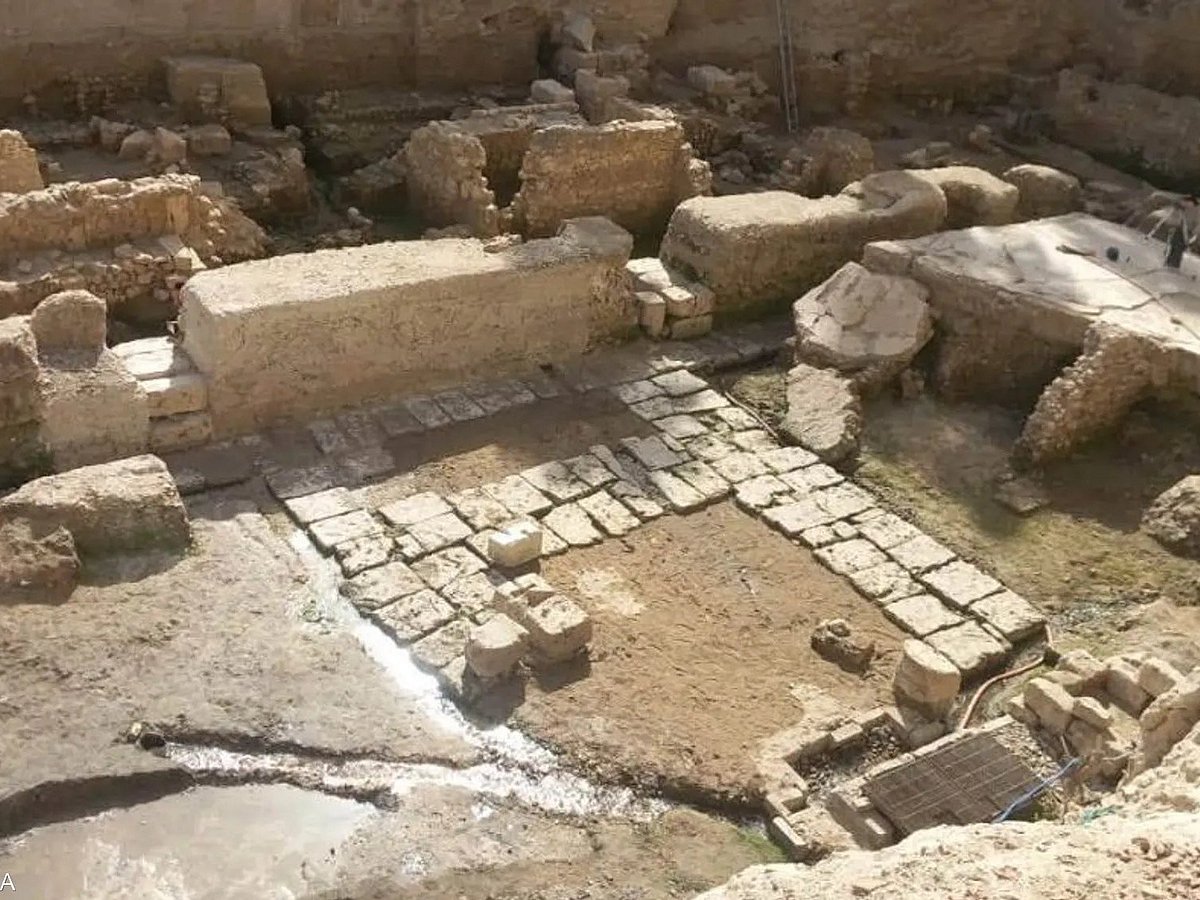
Dubai: A Greek archaeological mission has uncovered the foundations of a massive ancient stone structure in Alexandria's historic royal quarter, raising hopes of locating a long-lost Ptolemaic royal tomb mentioned in ancient historical accounts.
Egypt's Ministry of Tourism and Antiquities said the discovery was made in the Shallalat Gardens area by a Greek archaeological mission affiliated with the Hellenic Research Institute of Alexandrian Civilisation, led by Dr Calliope Limneos-Papakosta.
Get updated faster and for FREE: Download the Gulf News app now - simply click here.
The mission has been conducting excavations in the area for nearly 20 years, searching for remains of the ancient city and its royal district.
Excavations revealed the foundations of a large limestone building surrounded by walls, along with a tunnel extending northwards beneath the structure.
A scientific committee examining the remains has proposed that the building may have served a funerary purpose, potentially linking it to the Ptolemaic royal tomb complex described in ancient historical sources.
According to those accounts, King Ptolemy IV Philopator, who ruled Egypt from 221 to 204 BC, established a royal burial complex associated with the Ptolemaic dynasty.
The discovery could provide fresh clues to the location of royal burial sites that have remained elusive despite decades of archaeological research in Alexandria.