📰 Newspapers

Bangladesh raises garment workers’ minimum wage 36% after protests

Bangladesh raises garment workers’ minimum wage 36% after protests

The increase was the smallest in more than a decade.

DHAKA – Bangladesh raised the minimum monthly wage for garment workers by 36% to US$139 (S$179) on Nov 25, the smallest increase in more than a decade, despite weeks of protests that shut factories, disrupted production and prompted clashes with police as workers called for wages to be doubled.

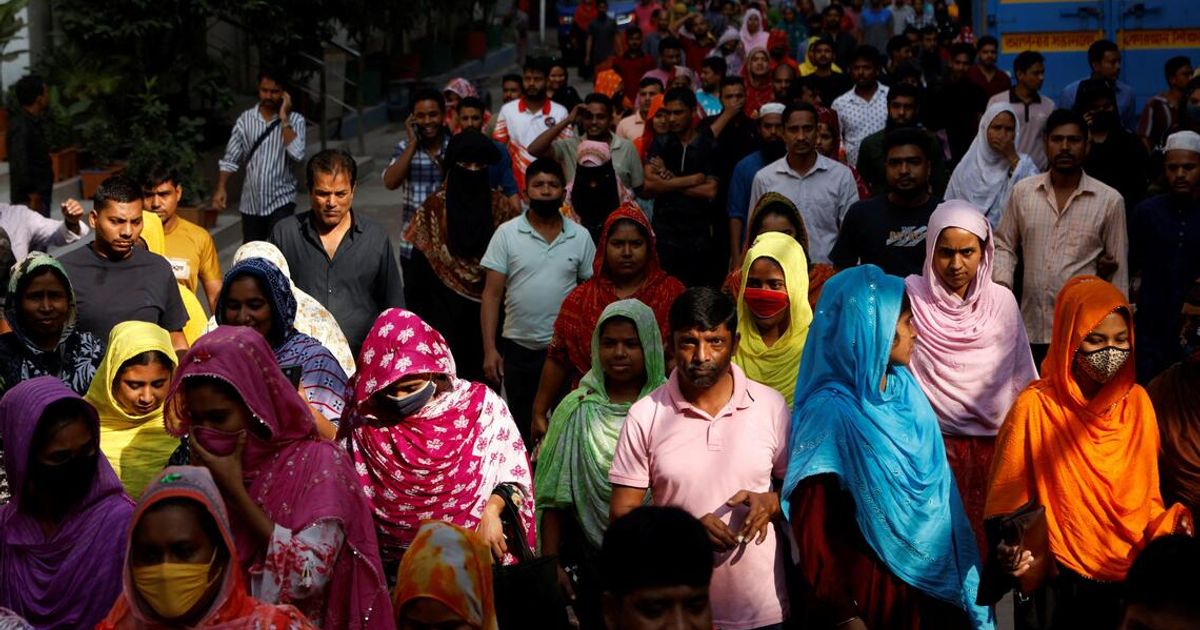
The increase follows weeks of protests by garment workers seeking higher pay that shut factories, blocked highways and disrupted production in a sector that employs more than four million workers, supplies retailers including H&M, Zara, Walmart, Target and Gap, and generates more than 80% of Bangladesh’s export earnings.

The government-appointed wage board approved the new wage structure around 2am local time on Nov 25 after nearly 12 hours of talks between workers’ and employers’ representatives.

The six-member board, including two worker representatives and two employer representatives, approved the new wage structure in a 4-2 vote, with four supporting the final 17,000 taka (S$179) minimum wage while two backed the workers’ demand for 18,000 taka, workers’ representative Babul Akhter said. The current minimum wage is set at 12,500 taka.

Under the four-grade structure, monthly wages will range from 17,000 taka for Grade 4 workers to 21,500 taka for Grade 1 workers. The Grade 4 rate is 4,500 taka higher than the current minimum wage set in 2023.

In brief

DHAKA – Bangladesh raised the minimum monthly wage for garment workers by 36% to US$139 (S$179) on Nov 25, the smallest increase in more than a decade, despite weeks of protests that shut factories, disrupted production and prompted clashes with police as workers called for wages to be doubled. Under the four-grade structure, monthly wages will range from 17,000 taka for Grade 4 workers to 21,500 taka for Grade 1 workers.

This is the opening of the story, shared with credit to The Straits Times — Asia. The rest of the report — with every detail — continues on the publisher’s website.

Continue reading at The Straits Times — Asia ↗

Cookie settings

Choose which cookies we may use. You can change this at any time from Cookie settings in the footer. Details of each cookie are in the Cookie Policy.

Strictly necessary

Needed for sign-in, security, payments and remembering these choices. Always on.

Preferences

Remember settings such as dark mode.

Analytics & performance

Help us count visits, understand which pages, devices and countries our readers use, and measure how well the site performs – anonymous and aggregated.

Advertising & marketing

Lets advertising partners show and personalise adverts, measure impressions, clicks and visits, prevent ad fraud and pay us – this is how the free site is funded.

🔔 News notifications

Get headlines from NewsHub on this device — even when the site is closed.

You can switch this off at any time. Works on Android, Windows, Mac and Linux browsers; on iPhone/iPad add the site to your Home Screen first.