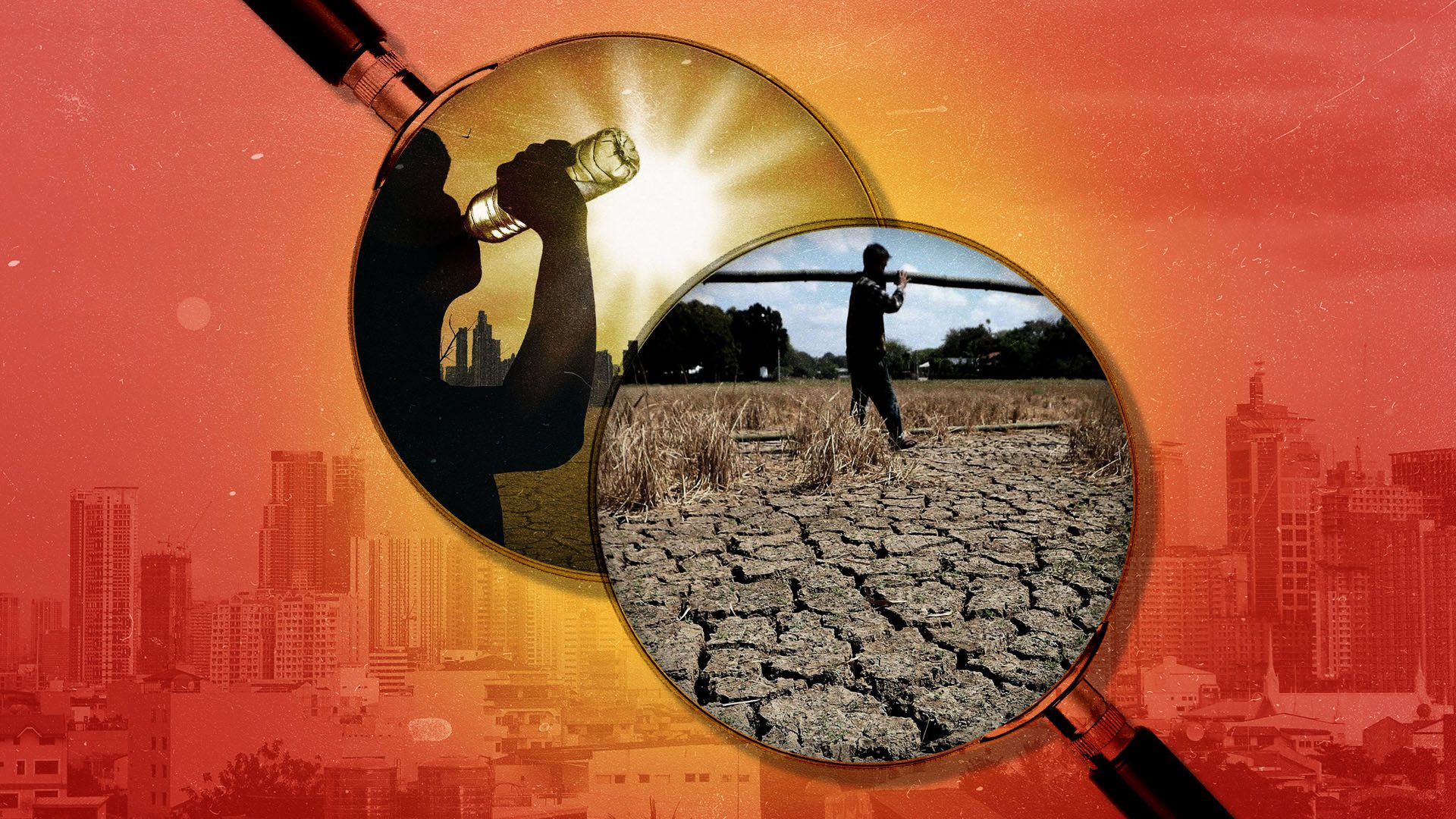
A “very strong” El Niño — informally called Super El Niño — is expected to start causing droughts in the Philippines by the end of November and continue until March 2027.
This phenomenon can have two critical impacts, the Philippine Atmospheric, Geophysical and Astronomical Services Administration (PAGASA) has warned. On one hand, dry spells and drought will threaten agriculture, water supply, and the broader economy. On the other, short-term but heavy rainfall may still affect the western parts of the country.
Must Read
FAST FACTS: What is a Super El Niño, and what should we expect from it?
The Philippines is no stranger to this devastating climate event. The United Nations (UN) said that going by its experiences with past El Niño events, the country has a “strong and well-established sensitivity” to this phenomenon.
According to the World Meteorological Organization, at least three “very strong” El Niños in the past had been as strong, based on the US-based National Oceanic and Atmospheric Administration’s (NOAA) Relative Oceanic Niño Index (RONI): 1982 to 1983, 1997 to 1998, and 2015 to 2016.
All these events have had a RONI of 2.0°C and above for five consecutive overlapping three-month periods, making them “very strong” El Niños. They occur roughly every 10-15 years, according to the World Resources Institute.