Hundreds of thousands of people lost access to HIV prevention drugs after wealthy countries cut foreign aid last year, according to the UN agency dedicated to HIV/AIDS.The United States, United Kingdom, France and other major donors all slashed funding for global health programmes in 2025, which decimated HIV treatment and prevention in lower-income countries. About 41 million people globally had HIV in 2025, with 1.2 million new infections.Overall, foreign aid to fight HIV fell by 18% in 2025 — the largest decline in almost two decades — while domestic funding increased by 4%, according to the Joint United Nations Programme on HIV/AIDS (UNAIDS).Countries in Western and Central Africa rely on foreign funding for about 90% of their HIV treatment services. But even countries with bigger domestic budgets still depend on donors to fund HIV prevention programmes.Since the 2025 cuts, the number of people with access to pre-exposure prophylaxis (PrEP) — an HIV prevention drug that protects people from infection if they are exposed to the virus — has fallen sharply, the UNAIDS report found. About 446,000 fewer people were on PrEP in 2025 than in 2024, though uptake increased in a few countries, including Brazil, Uganda and Tanzania.UNAIDS estimates that only 2.6 million people worldwide had access to PrEP last year, while more than 20 million could benefit.PrEP use plummeted…
Aid cuts leave 446,000 fewer people on HIV prevention drugs, UN agency warns
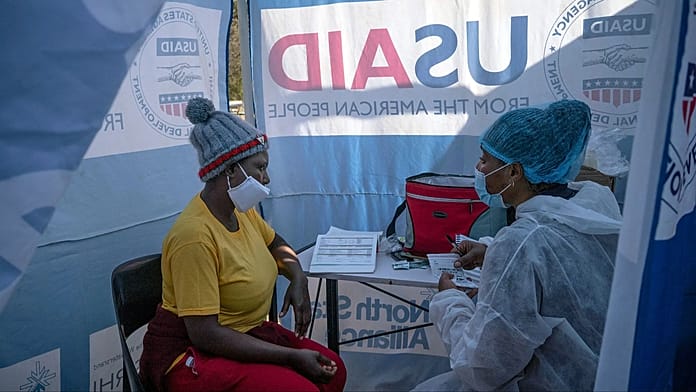
Last year’s global health cuts are reversing the world's progress on HIV, UNAIDS said in a new report.
In brief
Hundreds of thousands of people lost access to HIV prevention drugs after wealthy countries cut foreign aid last year, according to the UN agency dedicated to HIV/AIDS.The United States, United Kingdom, France and other major donors all slashed funding for global health programmes in 2025, which decimated HIV treatment and prevention in lower-income countries.
This is the opening of the story, shared with credit to Euronews. The rest of the report — with every detail — continues on the publisher’s website.
Continue reading at Euronews ↗