BULAMBO-ISALE, Congo: For health workers in the volatile eastern Democratic Republic of Congo (DRC), tackling local suspicions is as big a problem as combating the Ebola virus that has plagued it for six months.
In the rural community of Bulambo-Isale, AFP saw a small crowd gather this week along a dirt track, determined to prevent an ambulance bringing the body of a local Ebola victim for burial.
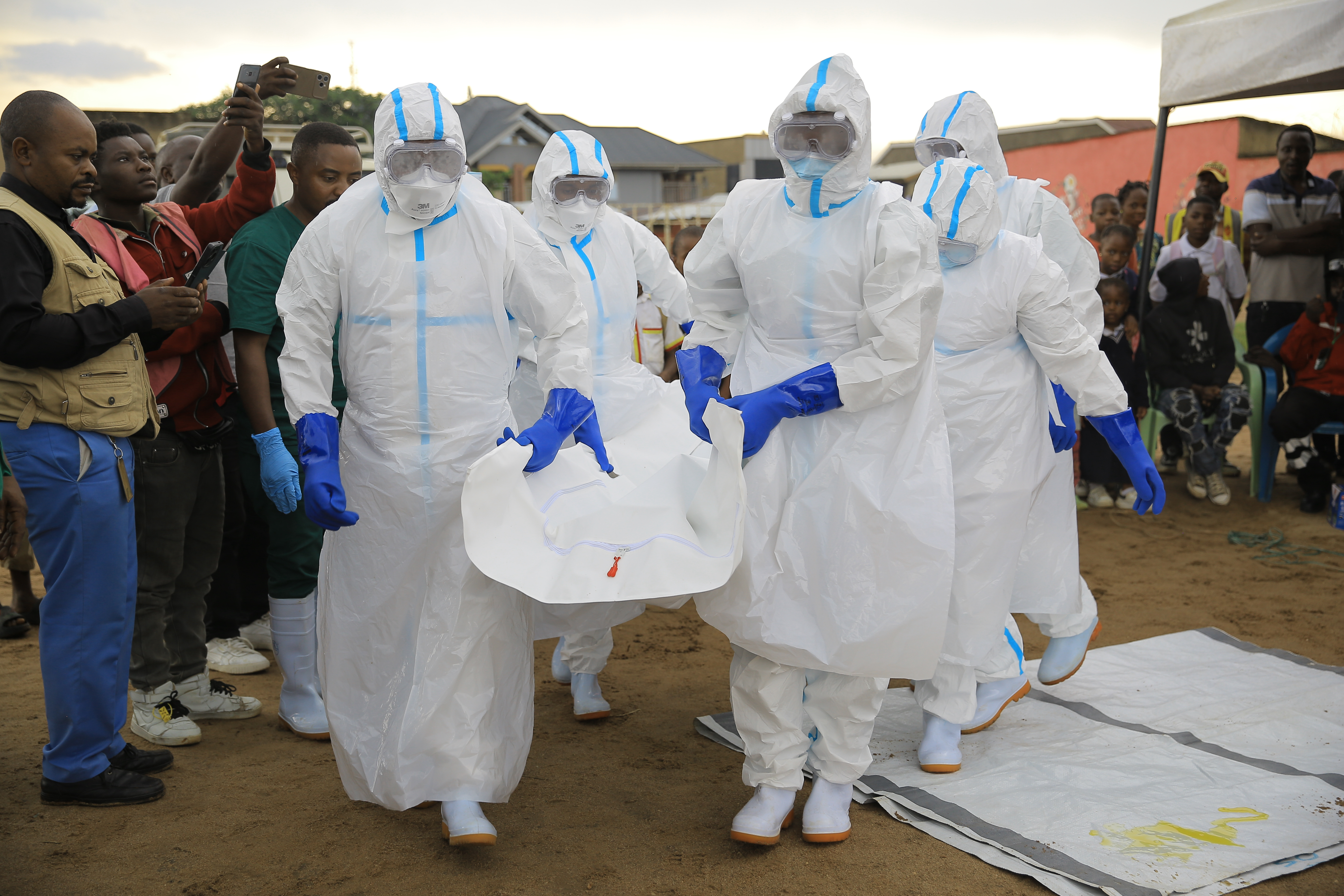
Victims of the highly contagious haemorrhagic fever, which spreads through direct contact with bodily fluids, must be interred in sealed body bags to prevent infection spreading from the corpse.
Burial ceremonies are conducted by specially trained health workers, anonymous in protective hazmat suits, some of whom locals allege are brought in from outside the community and do not speak the local languages.
But custom dictates that the deceased be buried by their own family and their body be allowed to fuse with the earth of their ancestors.
“The authorities have imposed the Ebola response on locals without first making sure how they interpret it,” grumbled Patricien Kambale, who became a livestock farmer after university.
“The sick victim gets carted away in a vehicle and locals don’t know where they’re being taken. Then we learn later that the person has died so locals think the doctors are using poisoned medicine to kill people,”