

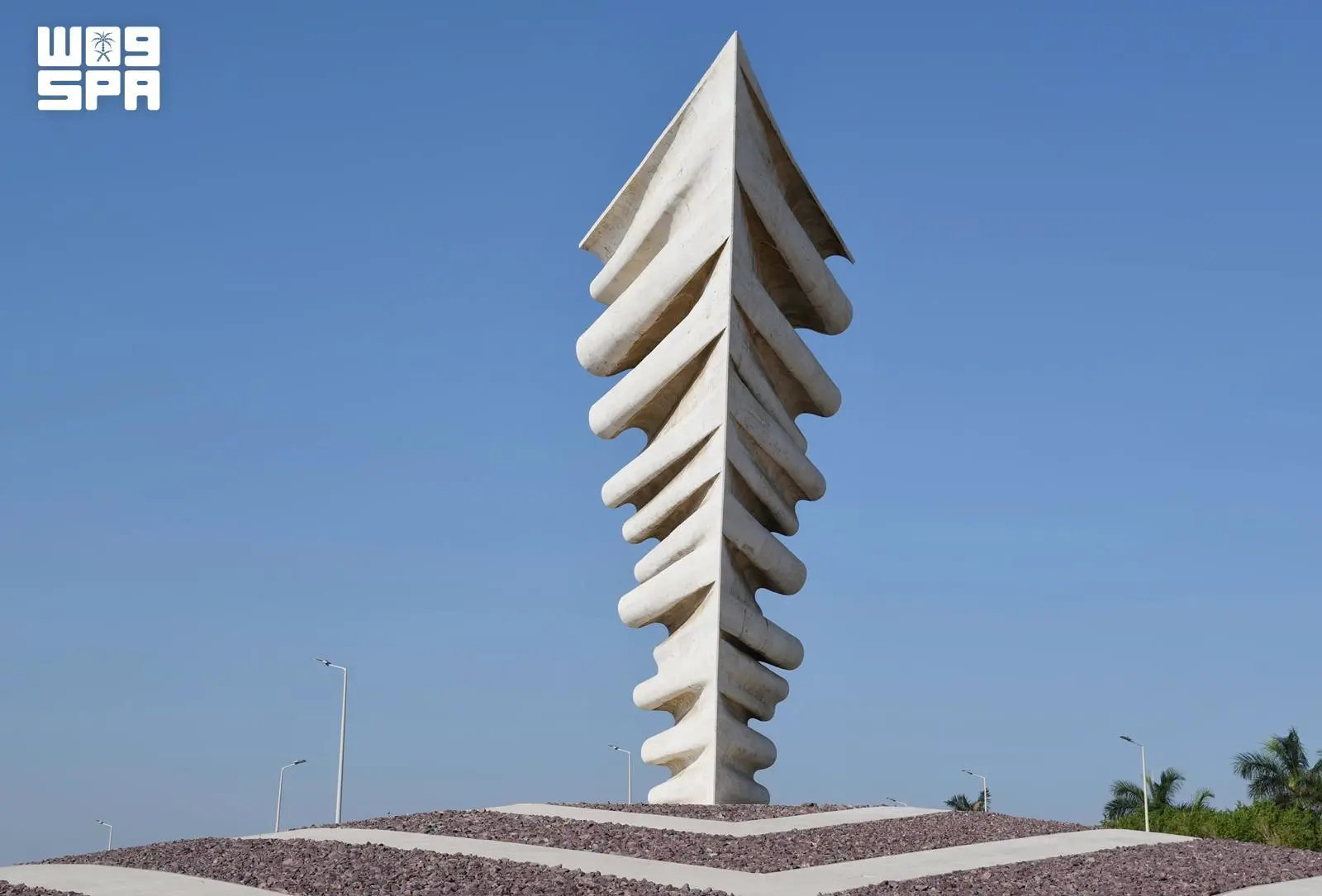
JEDDAH: Around 30 art installations by Spanish artist and architect Julio Lafuente adorn the streets and squares of Jeddah, serving as visual landmarks deeply embedded in the memories of residents and visitors alike. Over the decades, these works have helped shape the aesthetic identity of the “Bride of the Red Sea,” turning the city into an open-air art gallery that blends artistic expression with the authenticity of its local environment.
Lafuente’s creations accounted for the largest share of the “Beautification of Jeddah” project, launched in the 1970s. Beyond their aesthetic appeal, the sculptures served a practical purpose as navigational markers and reference points, much like digital maps do today. Over time, they have become iconic landmarks closely associated with the city.
Since beginning his collaboration with Jeddah Municipality in the mid-1970s, Lafuente produced a diverse collection of artworks rich in symbolism and meaning. Using materials sourced from the local environment, he reinforced the connection between the sculptures, their surroundings, and the collective memory of residents and visitors.
Among his most notable works is the “Bicycle” sculpture, a familiar Jeddah landmark distinguished by its striking design and massive iron structure, which stands 15 meters tall. Located north of King Abdulaziz Road, the globe sculpture, made of glass and colored concrete, symbolizes Makkah’s central position in the Islamic world.