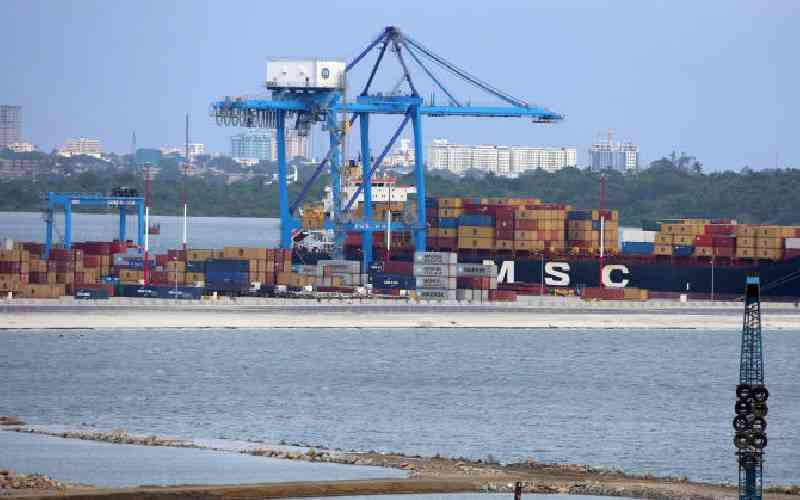
Kenya's maritime sector has seen increased cargo volumes and growing interest from international shipping lines.
But industry players warn that inadequate port capacity, operational inefficiencies and poor hinterland connectivity could undermine the country's ambition to become a leading maritime and logistics hub in East and Central Africa.
The Kenya Ships Agents Association (KSAA), which represents shipping lines whose vessels call at Kenyan ports, says the growing number of vessels calling at the ports of Mombasa and Lamu presents significant economic opportunities.
However, it insists that sustained investment in infrastructure, improved port operations and better coordination among industry stakeholders are necessary to accommodate the growing demand.
According to the association's 2026 year-end media brief, the Port of Mombasa handled approximately 45.45 million metric tonnes of cargo in 2025, compared with 40.99 million tonnes in 2024.
Container traffic also increased to approximately 2.11 million Twenty-foot Equivalent Units (TEUs), and this year is expected to see even higher volumes.
At the Port of Lamu, cargo throughput increased significantly from 74,380 metric tonnes to 799,161 metric tonnes, while container traffic reached 55,687 TEUs, even though the port still lacks adequate inland infrastructure to move cargo directly to the hinterland markets.
KSAA Chief Executive Elijah Mbaru said the growth demonstrates increasing interest from international shipping lines, but warns that existing infrastructure is struggling to keep…