📰 Newspapers

EU-Indonesia trade deal opens new markets, but challenges remain

EU-Indonesia trade deal opens new markets, but challenges remain

The agreement eyes new export and investment opportunities for Jakarta and Brussels. But can Indonesia turn Europe's growing interest in its markets and critical minerals into sustainable gains at home?

As the European Union seeks to deepen its presence in Asia and diversify its trade relationships, Indonesia is emerging as an increasingly important partner.

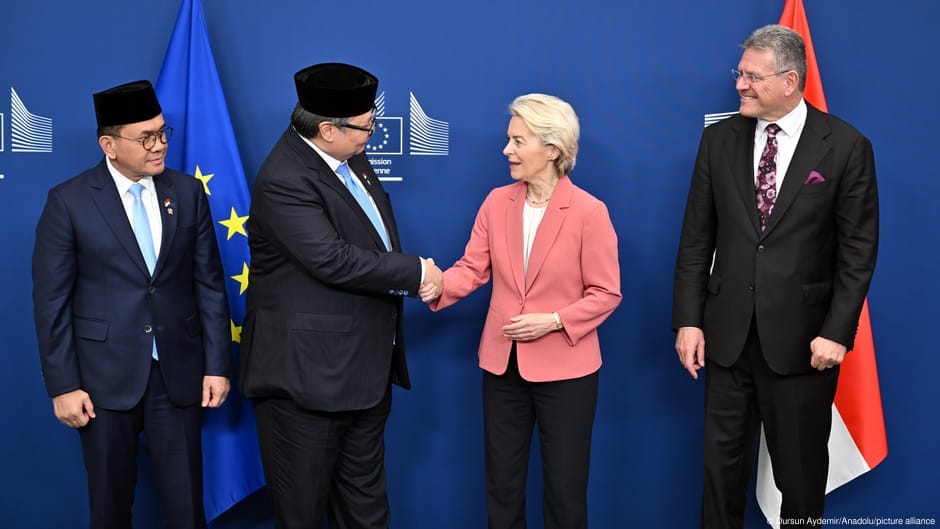
At a signing ceremony in Brussels last week, European Commission President Ursula von der Leyen described the bloc's trade agreement with Jakarta as one of its "most ambitious deals" in the region, linking markets of 730 million people.

The deal, the culmination of nearly a decade of negotiations, reflects the EU's efforts to diversify its trade partnerships, secure access to critical raw materials and reduce strategic dependencies on China.

For Indonesia, it offers opportunities to attract investment, expand exports and strengthen its position in global supply chains.

The agreement will gradually scrap tariffs on more than 98% of product categories, covering almost the entire value of bilateral trade over 15 years.

To view this video please enable JavaScript, and consider upgrading to a web browser that supports HTML5 video

For the EU, gaining better access to critical raw materials, particularly nickel, and diversifying its supply chains are central to its strategic partnership with Indonesia, said Philip Schleifer, an associate professor of political science at the University of Amsterdam.

"The main strategic interests are opening up a large and growing market for European companies, diversifying and deepening its economic partnerships, reducing strategic dependencies on China, and securing…

In brief

As the European Union seeks to deepen its presence in Asia and diversify its trade relationships, Indonesia is emerging as an increasingly important partner. The deal, the culmination of nearly a decade of negotiations, reflects the EU's efforts to diversify its trade partnerships, secure access to critical raw materials and reduce strategic dependencies on China.

This is the opening of the story, shared with credit to DW — Top stories. The rest of the report — with every detail — continues on the publisher’s website.

Continue reading at DW — Top stories ↗

Cookie settings

Choose which cookies we may use. You can change this at any time from Cookie settings in the footer. Details of each cookie are in the Cookie Policy.

Strictly necessary

Needed for sign-in, security, payments and remembering these choices. Always on.

Preferences

Remember settings such as dark mode.

Analytics & performance

Help us count visits, understand which pages, devices and countries our readers use, and measure how well the site performs – anonymous and aggregated.

Advertising & marketing

Lets advertising partners show and personalise adverts, measure impressions, clicks and visits, prevent ad fraud and pay us – this is how the free site is funded.

🔔 News notifications

Get headlines from NewsHub on this device — even when the site is closed.

You can switch this off at any time. Works on Android, Windows, Mac and Linux browsers; on iPhone/iPad add the site to your Home Screen first.