📰 Newspapers

NASA’s DART Mission Left a Stadium-Sized Crater on an Asteroid. And We Just Got the Pictures to Prove It

NASA’s DART Mission Left a Stadium-Sized Crater on an Asteroid. And We Just Got the Pictures to Prove It

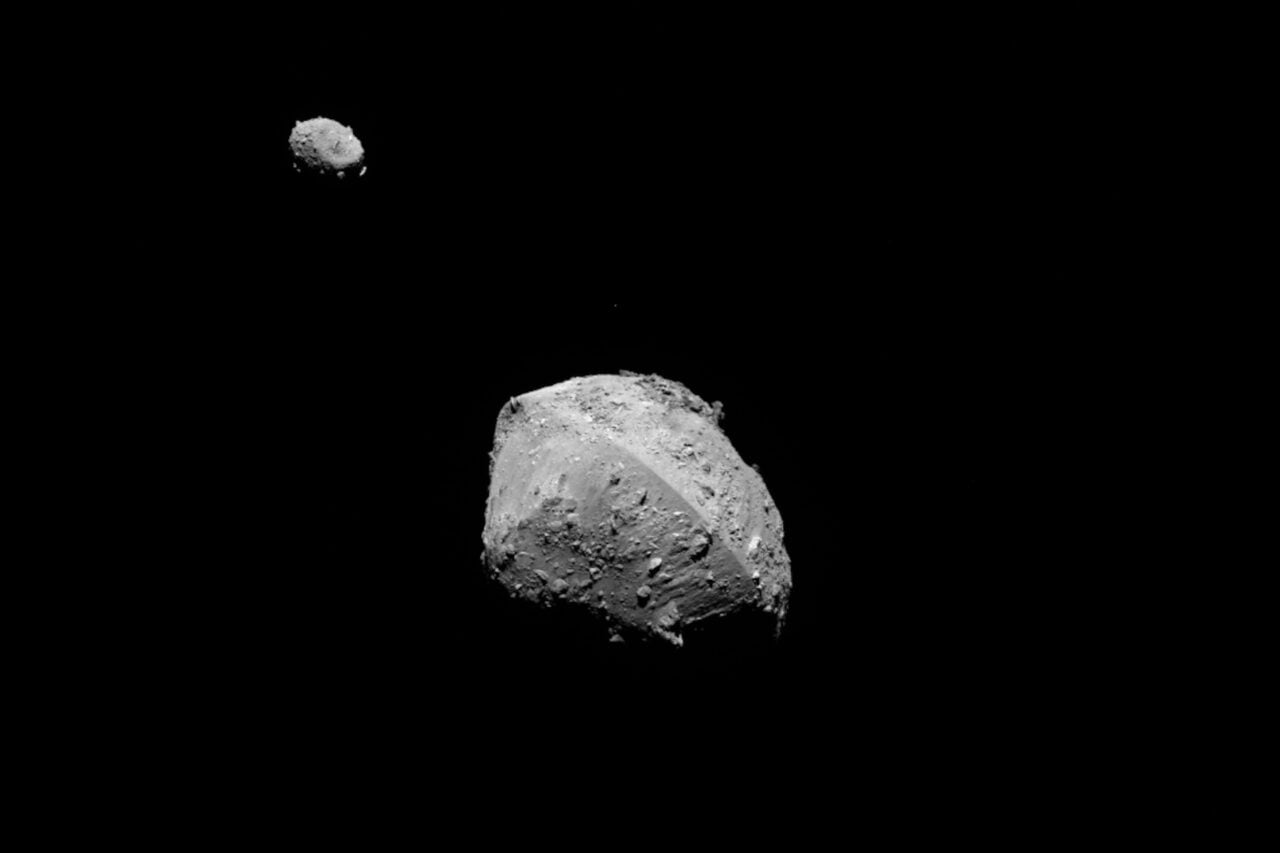
The impact sent Dimorphos into a chaotic tumble, and one face flattened with a large crater.

In 2022, NASA crashed a spacecraft into an asteroid at nearly 15,000 miles per hour (24,000 kilometers per hour) as a first-of-its-kind test of a planetary defense system designed to alter the trajectory of an incoming object. Four years later, it looks like asteroid is still dealing with the aftermath. New observations reveal that the impact left one side of the rock visibly flattened and scattered hundreds of boulders across the surrounding area.

The European Space Agency (ESA) revealed the first images from its Hera mission, which was sent to observe the site of the crash. Hera is a follow-up expedition to NASA’s DART (Double Asteroid Redirection Test) operation.

The new close-up views of the asteroid show that DART left behind a stadium-sized crater and sent the space rock into a chaotic tumble. The impact also appears to have blasted loose previously unknown boulders, which are now encircling the targeted asteroid and its companion.

Hera, which launched on October 7, 2024, arrived at the asteroid three weeks ago and is currently about 19 miles (30 kilometers) away from the space rock. The car-sized spacecraft is designed to perform a detailed, post-impact survey with the aim of turning a one-time space experiment into a well-understood planetary defense mechanism. The mission could also help scientists learn more about how asteroids form.

In brief

In 2022, NASA crashed a spacecraft into an asteroid at nearly 15,000 miles per hour (24,000 kilometers per hour) as a first-of-its-kind test of a planetary defense system designed to alter the trajectory of an incoming object. Hera is a follow-up expedition to NASA’s DART (Double Asteroid Redirection Test) operation. The new close-up views of the asteroid show that DART left behind a stadium-sized crater and sent the space rock into a chaotic tumble.

This is the opening of the story, shared with credit to Gizmodo. The rest of the report — with every detail — continues on the publisher’s website.

Continue reading at Gizmodo ↗

Cookie settings

Choose which cookies we may use. You can change this at any time from Cookie settings in the footer. Details of each cookie are in the Cookie Policy.

Strictly necessary

Needed for sign-in, security, payments and remembering these choices. Always on.

Preferences

Remember settings such as dark mode.

Analytics & performance

Help us count visits, understand which pages, devices and countries our readers use, and measure how well the site performs – anonymous and aggregated.

Advertising & marketing

Lets advertising partners show and personalise adverts, measure impressions, clicks and visits, prevent ad fraud and pay us – this is how the free site is funded.

🔔 News notifications

Get headlines from NewsHub on this device — even when the site is closed.

You can switch this off at any time. Works on Android, Windows, Mac and Linux browsers; on iPhone/iPad add the site to your Home Screen first.