

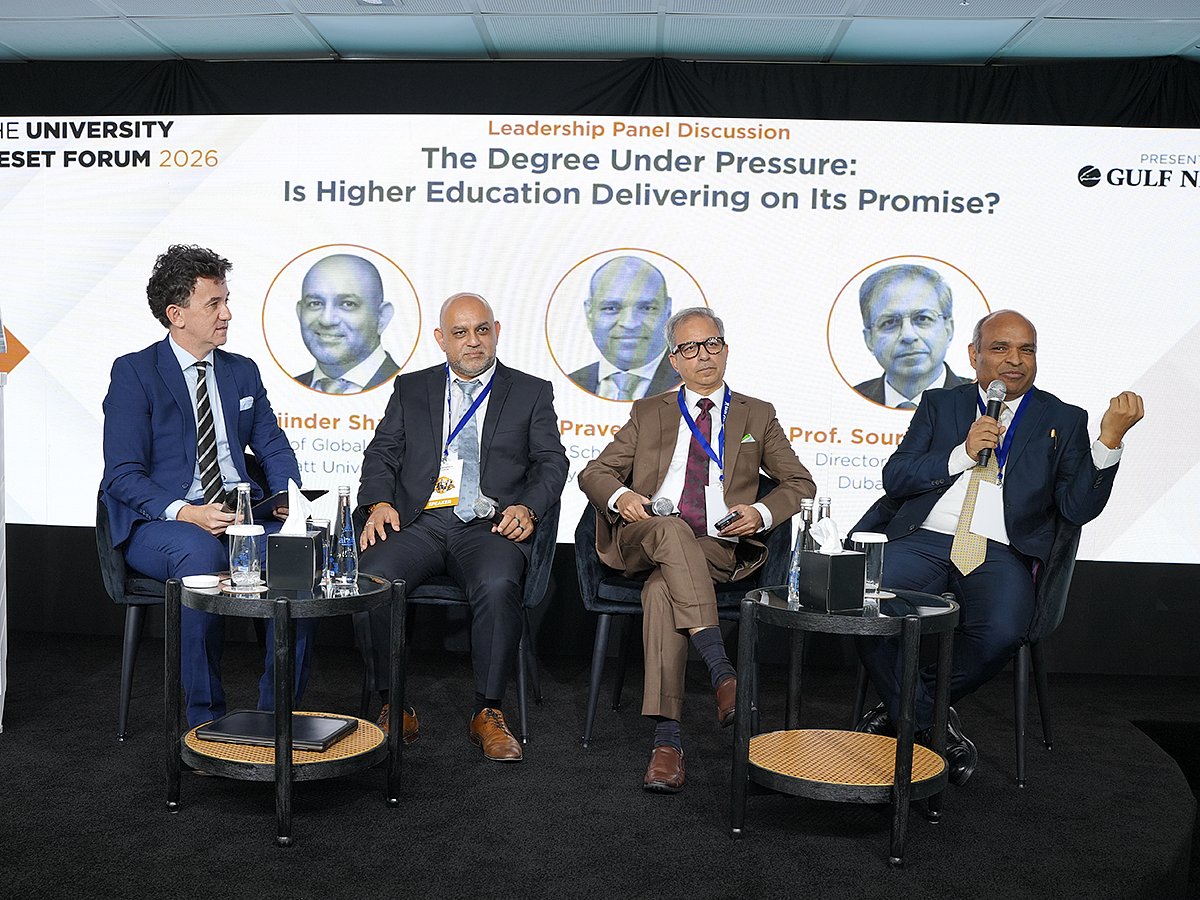
Practical experience, industry exposure and skills such as critical thinking and adaptability are as critical as subject knowledge as graduates enter a workplace where AI is changing the demands across professions. Universities must develop well-rounded graduates who can apply their knowledge and respond effectively to unfamiliar challenges, said educators during a panel at the University Reset Forum 2026.
With AI putting pressure on entry-level jobs and the rising cost of higher education prompting questions about the value of a degree, universities need to reconsider what they teach, how they assess students and how they prepare them for careers that could span multiple industries.
“We are possibly training students today for jobs that do not yet exist, which is why agility is extremely important,” said Dr Praveen Gupta, Dean, School of Business, Amity University Dubai.
Drawing on his own experience of studying engineering before pursuing a career in banking and subsequently moving into academia, Dr Gupta explained how the value of a degree extends well beyond the discipline a student chooses.
“The value of a degree lies in how we train our students, helping them develop self-discovery skills, soft skills, adaptability and the ability to learn new skills.”
With AI making subject expertise alone insufficient, he stressed the importance of developing T-shaped skills.