📰 Newspapers

Albania's youth are protesting in Flamingo Revolution, not leaving the country anymore

Albania's youth are protesting in Flamingo Revolution, not leaving the country anymore

Youth protests against a rigid political system and corruption have shaken the government of Albanian Prime Minister Edi Rama. They also show that fewer young people are willing to emigrate in search of a better future.

In mid-October, students in the Albanian capital Tirana set a suitcase on fire and threw it into the courtyard of the Education Ministry. Everyone in the country understood the symbolism: According to the 2023 census, the population of this Western Balkan country shrunk by about 420,000 between 2011 and 2023 — by nearly 15% — primarily because of emigration.

For a generation of young Albanians, this was the response to a system that gave them little voice. But now young people want to stay, and the protesters are saying that the system has to change.

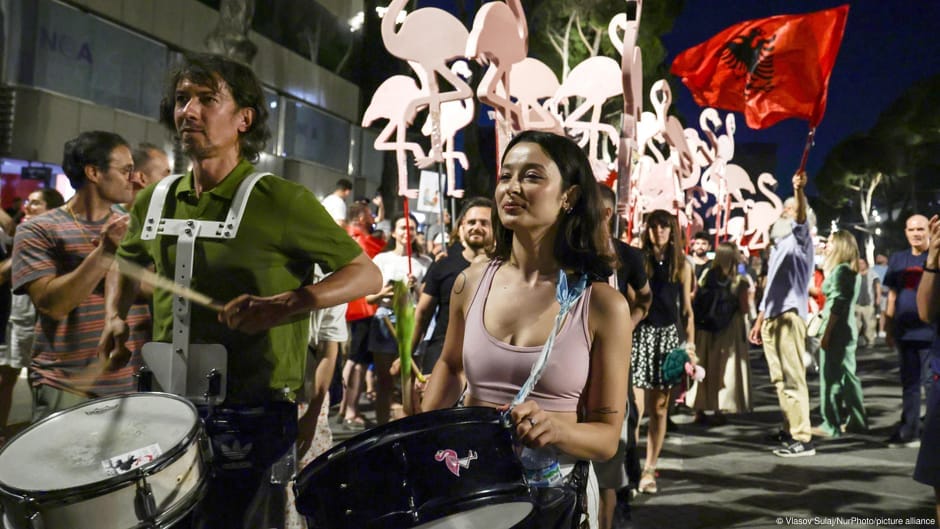
Known as the "Flamingo Revolution," the social movement began in May with demonstrations against a luxury resort in a coastal reserve that US President Donald Trump's daughter Ivanka Trump and her husband Jared Kushner were involved in.

It quickly evolved into broader criticism against corruption, Prime Minister Edi Rama's government and his ruling Socialist Party and the country's entire political class.

Thousands marched almost every evening for four months in protests that were largely peaceful. But on October 13, a student protest escalated and there were clashes with police. Since then, the unrest has continued, with police using tear gas, water cannons and rubber bullets against demonstrators. There have been hundreds of arrests and many injuries, amid damage to public and private property.

In brief

In mid-October, students in the Albanian capital Tirana set a suitcase on fire and threw it into the courtyard of the Education Ministry. It quickly evolved into broader criticism against corruption, Prime Minister Edi Rama's government and his ruling Socialist Party and the country's entire political class. Since then, the unrest has continued, with police using tear gas, water cannons and rubber bullets against demonstrators.

This is the opening of the story, shared with credit to DW — Top stories. The rest of the report — with every detail — continues on the publisher’s website.

Continue reading at DW — Top stories ↗

Cookie settings

Choose which cookies we may use. You can change this at any time from Cookie settings in the footer. Details of each cookie are in the Cookie Policy.

Strictly necessary

Needed for sign-in, security, payments and remembering these choices. Always on.

Preferences

Remember settings such as dark mode.

Analytics & performance

Help us count visits, understand which pages, devices and countries our readers use, and measure how well the site performs – anonymous and aggregated.

Advertising & marketing

Lets advertising partners show and personalise adverts, measure impressions, clicks and visits, prevent ad fraud and pay us – this is how the free site is funded.

🔔 News notifications

Get headlines from NewsHub on this device — even when the site is closed.

You can switch this off at any time. Works on Android, Windows, Mac and Linux browsers; on iPhone/iPad add the site to your Home Screen first.