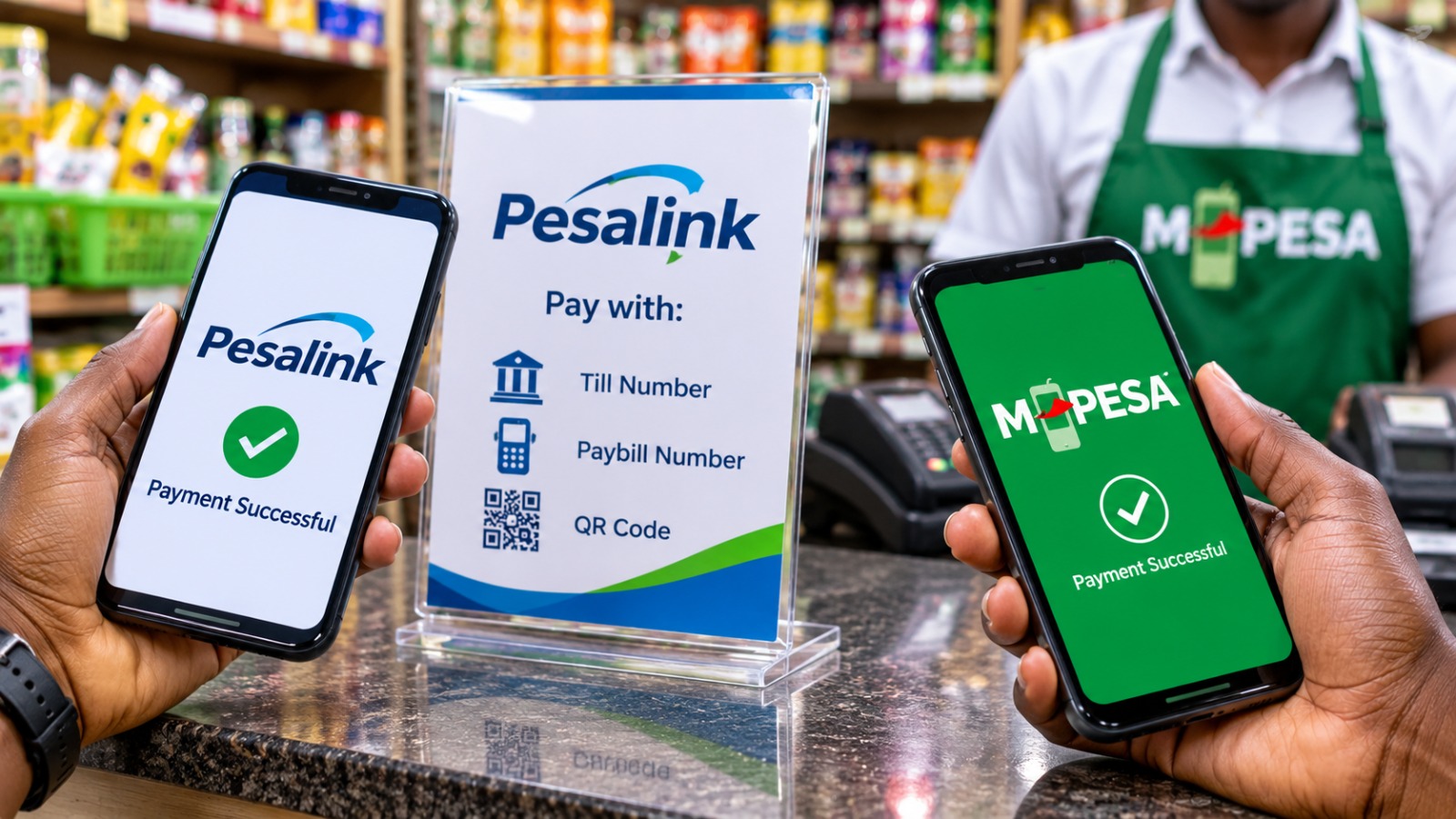
Kenya’s digital payments market is entering a new phase of competition following Pesalink’s introduction of person-to-business (P2B) payments, allowing customers to pay merchants through till numbers, Paybill numbers and QR codes. The development places the bank-owned payment network in more direct competition with Safaricom’s M-PESA, which has established a strong presence in Kenya’s merchant payments market. While Pesalink’s new service could expand payment options and encourage competition, its ability to challenge M-PESA will depend on affordability, accessibility and widespread adoption.
Pesalink, operated by Integrated Payment Services Limited (IPSL), a subsidiary of the Kenya Bankers Association, was initially established to facilitate instant transfers between bank accounts. It has since expanded its network to include more than 80 participating institutions, including banks, Savings and Credit Cooperative Organisations (SACCOs), telecommunications companies and fintechs. Its latest development introduces merchant payments, enabling customers to pay businesses directly from participating financial institutions using familiar merchant identifiers. The service is currently being piloted at Quickmart supermarkets through Equity Bank and SBM Bank, with plans to expand participation across the network. The introduction of merchant payments also enabled Pesalink to attain basic inclusivity status in AfricaNenda’s 2026 State of Inclusive Instant Payment Systems report, reflecting the expansion of its supported payment use cases.
On the other hand, M-PESA benefits from an established customer and merchant ecosystem that provides…