📰 Newspapers

Arsenic in the water: Thailand presses Myanmar over mining pollution

Arsenic in the water: Thailand presses Myanmar over mining pollution

Thailand is seeking to tackle river pollution stemming from rare-earth mines in neighboring Myanmar. The two countries held joint talks this week as a "first step towards agreeing on the evidence."

Thailand is pushing its neighbor Myanmar to take on unregulated mining.

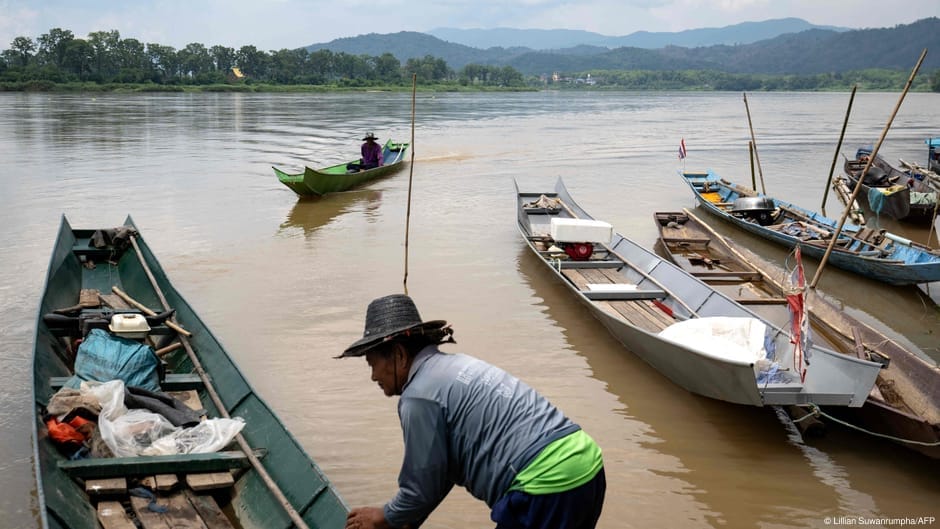
A toxic border river is putting lives and livelihoods at risk in northern Thailand. The Kok River, once rich in fish, is now polluted with arsenic, mercury, and other hazardous contaminants.

The reason is the mining activity in the militia-controlled regions of Myanmar. Most of these mines are located in Shan state, where civil war has raged since the 2021 military coup.

The mining activity is driven in part by China's dominant rare earth industry.

Bangkok this week hosted the first Thai-Myanmar working group where it said tests proved rare-earth and gold mines in Myanmar were the reason of the pollution downstream. China was also present in the talks.

The two sides agreed to joint water sampling on the Kok and Sai rivers. This will cover 12 water sampling locations and is expected to begin between December and January.

But no public agreement was made about Thailand's request for a six-month suspension of mining operations.

The talks follow the suspension of tap water supplies to 14 villages in Mae Sai district earlier this month, near the Myanmar border, after arsenic levels were found to be nearly 30 times higher than government limits.

To view this video please enable JavaScript, and consider upgrading to a web browser that supports HTML5…

In brief

Thailand is pushing its neighbor Myanmar to take on unregulated mining. The reason is the mining activity in the militia-controlled regions of Myanmar. The mining activity is driven in part by China's dominant rare earth industry. Bangkok this week hosted the first Thai-Myanmar working group where it said tests proved rare-earth and gold mines in Myanmar were the reason of the pollution downstream.

This is the opening of the story, shared with credit to DW — Top stories. The rest of the report — with every detail — continues on the publisher’s website.

Continue reading at DW — Top stories ↗

Cookie settings

Choose which cookies we may use. You can change this at any time from Cookie settings in the footer. Details of each cookie are in the Cookie Policy.

Strictly necessary

Needed for sign-in, security, payments and remembering these choices. Always on.

Preferences

Remember settings such as dark mode.

Analytics & performance

Help us count visits, understand which pages, devices and countries our readers use, and measure how well the site performs – anonymous and aggregated.

Advertising & marketing

Lets advertising partners show and personalise adverts, measure impressions, clicks and visits, prevent ad fraud and pay us – this is how the free site is funded.

🔔 News notifications

Get headlines from NewsHub on this device — even when the site is closed.

You can switch this off at any time. Works on Android, Windows, Mac and Linux browsers; on iPhone/iPad add the site to your Home Screen first.