📰 Newspapers

Astronomers Watch a Giant Dying Star Devour Its Smaller Companion

Astronomers Watch a Giant Dying Star Devour Its Smaller Companion

The first-of-its-kind observation provides rare insight into this type of stellar merger.

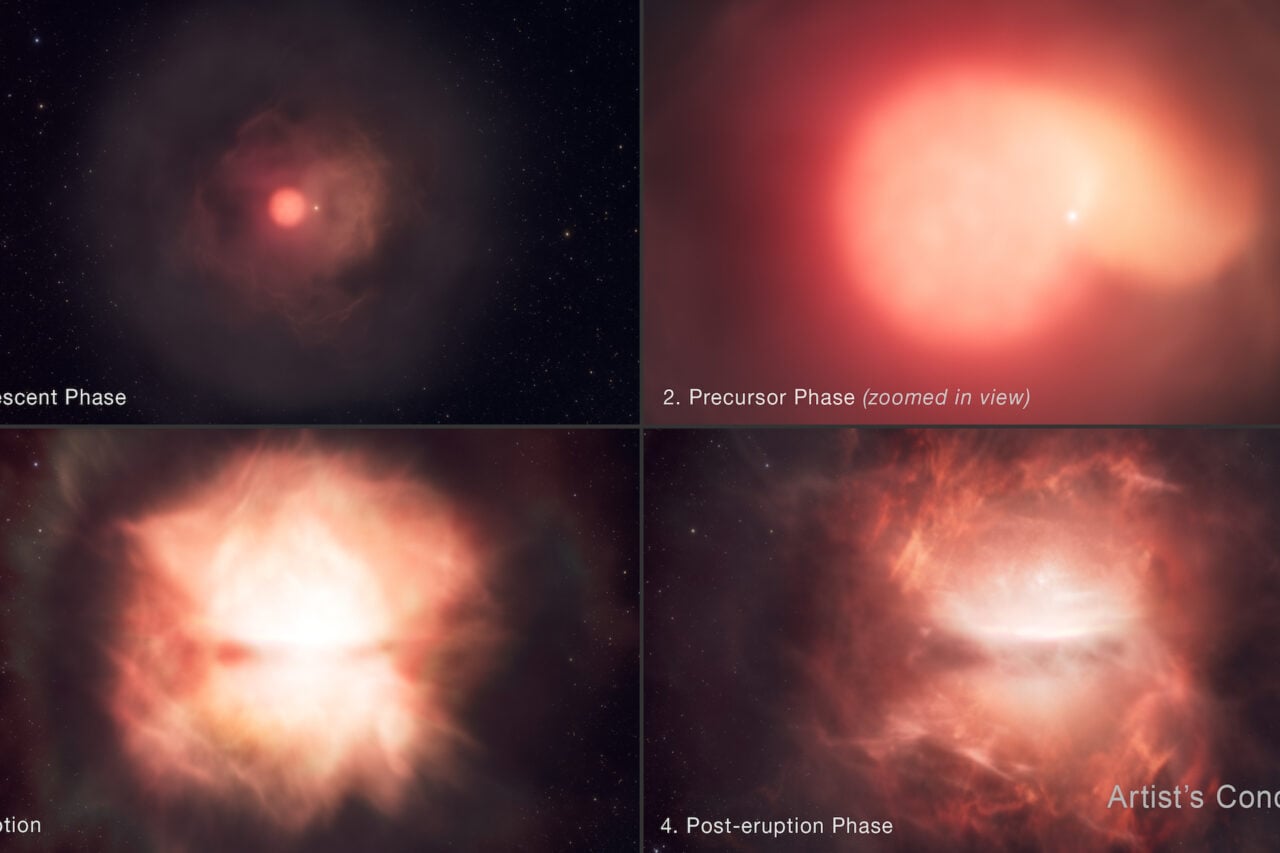
A bright flash in the nearby Andromeda galaxy turned out to be the spectacular death spiral of one star consuming another. The culprit was an enormous red giant, dubbed Big Bao, which had expanded until it swallowed a smaller companion, Small Bao. In fewer than 10 orbits, the smaller star spiraled into the giant’s core, triggering the brilliant cosmic display.

In a recent study published in Nature, a team of astronomers detailed the stellar merger from start to finish, providing an unprecedented glimpse at the conditions that led to this type of cosmic event. “The excitement was real. We couldn’t quite believe our luck,” Viraj Karambelkar, a NASA Hubble Fellow at Columbia University and lead author of the study, said in a statement. “No one expected to see an explosion in their lifetime, as these stars remain relatively stable for thousands of years.”

The stellar merger took place about 2.5 million light years away from Earth on the outskirts of the Andromeda galaxy. In 2023, the astronomers behind the study first noticed a red giant star, or a dying star with expanding outer layers, that was gradually brightening.

Karambelkar and his colleagues launched an observing campaign, bringing together telescopes at Caltech’s Palomar Observatory and other facilities, to watch as the star continued to brighten over the course of two years.


In brief

A bright flash in the nearby Andromeda galaxy turned out to be the spectacular death spiral of one star consuming another. In fewer than 10 orbits, the smaller star spiraled into the giant’s core, triggering the brilliant cosmic display. In 2023, the astronomers behind the study first noticed a red giant star, or a dying star with expanding outer layers, that was gradually brightening.

This is the opening of the story, shared with credit to Gizmodo. The rest of the report — with every detail — continues on the publisher’s website.

Continue reading at Gizmodo ↗

Cookie settings

Choose which cookies we may use. You can change this at any time from Cookie settings in the footer. Details of each cookie are in the Cookie Policy.

Strictly necessary

Needed for sign-in, security, payments and remembering these choices. Always on.

Preferences

Remember settings such as dark mode.

Analytics & performance

Help us count visits, understand which pages, devices and countries our readers use, and measure how well the site performs – anonymous and aggregated.

Advertising & marketing

Lets advertising partners show and personalise adverts, measure impressions, clicks and visits, prevent ad fraud and pay us – this is how the free site is funded.

🔔 News notifications

Get headlines from NewsHub on this device — even when the site is closed.

You can switch this off at any time. Works on Android, Windows, Mac and Linux browsers; on iPhone/iPad add the site to your Home Screen first.