The German Bundestag approved the 2027 federal budget on Friday with the backing of the governing coalition of the Christian Democratic Union (CDU), its Bavarian sister party, the Christian Social Union (CSU), and the Social Democratic Party (SPD). A total of 317 MPs voted in favour of the budget bill, while 260 voted against.Planned expenditure under the core federal budget amounts to around €556 billion, an increase of €31.4 billion, or approximately six per cent, compared with the previous year.Meanwhile, projected tax revenues of €391.3 billion fall short of the federal government’s original forecasts.New borrowing set to reach highest level since the pandemicThe federal government plans to borrow around €210.4 billion in 2027, marking the second-highest level of new borrowing in the history of the Federal Republic. Only in 2021, at the height of the coronavirus pandemic, was borrowing higher, at €215.4 billion.The planned borrowing is divided into three categories:Core federal budget: €123 billionSpecial fund for infrastructure and climate neutrality: €57.8 billionSpecial fund for the German armed forces (Bundeswehr): €29.6 billionThese so-called special funds do not represent accumulated financial reserves. Instead, they serve as financing mechanisms that allow the government to undertake additional debt-financed expenditure outside the core federal budget.Defence spending rises to almost €140 billionDefence spending accounts for a substantial share of the overall increase in federal expenditure.
German Bundestag approves record 2027 budget as borrowing hits €210bn
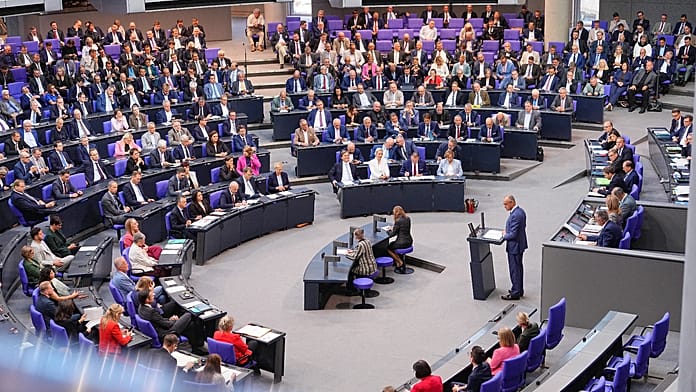
Record spending, substantial investment in defence and borrowing on a historic scale: the Bundestag has approved Germany’s 2027 federal budget. Meanwhile, the proposed pension reform envisages longer working lives, higher contributions and steeper penalties for early retirement.
In brief
The German Bundestag approved the 2027 federal budget on Friday with the backing of the governing coalition of the Christian Democratic Union (CDU), its Bavarian sister party, the Christian Social Union (CSU), and the Social Democratic Party (SPD). Instead, they serve as financing mechanisms that allow the government to undertake additional debt-financed expenditure outside the core federal budget.Defence spending rises to almost €140 billionDefence spending accounts for a substantial share of the overall increase in federal expenditure.
This is the opening of the story, shared with credit to Euronews. The rest of the report — with every detail — continues on the publisher’s website.
Continue reading at Euronews ↗