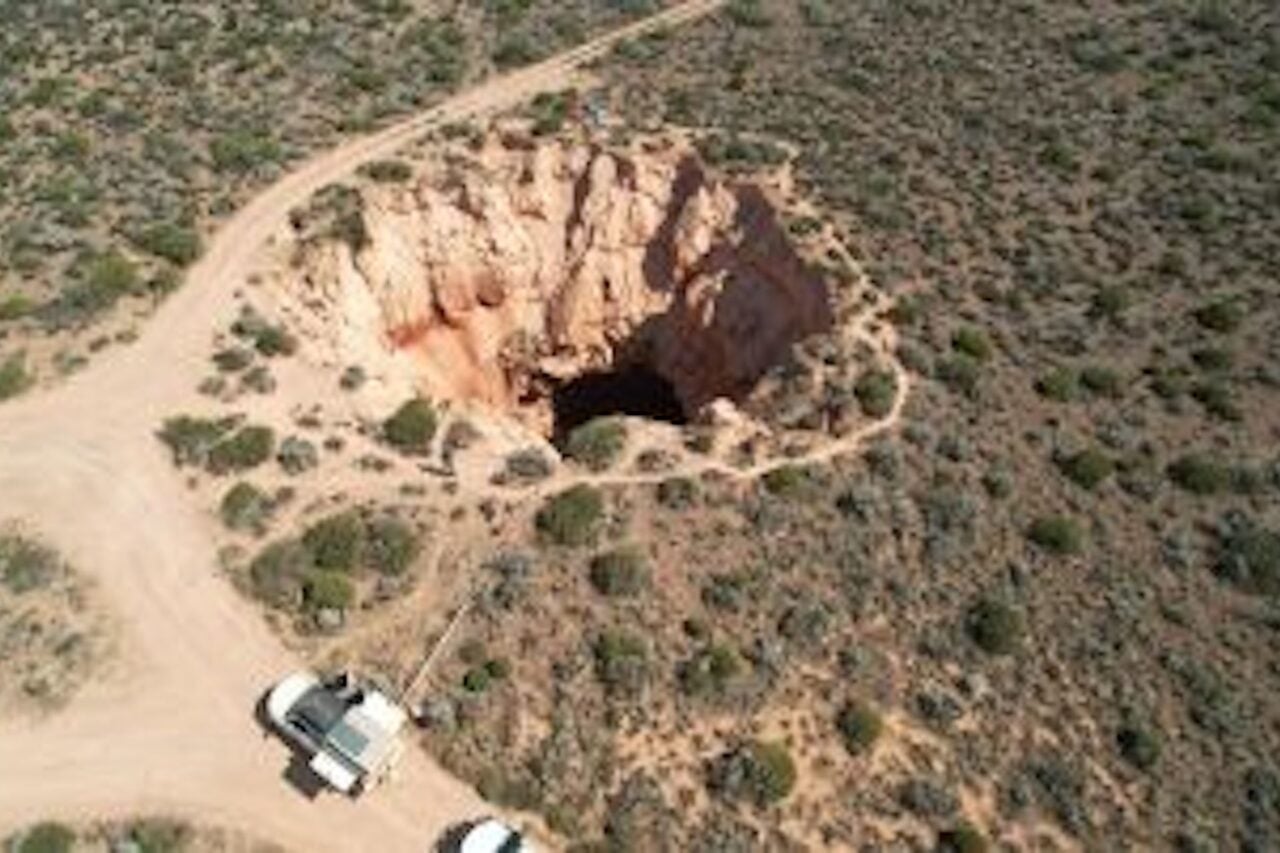
From above, they look like the remnants of ancient rivers, with long trenches stretching across Australia’s otherwise flat landscape. But these mysterious geological features aren’t the work of flowing water. Instead, researchers believe they are surface scars left behind by enormous underground cave systems that gradually collapsed over millions of years.
In a new study, scientists investigated five trenches on the Nullarbor Plain in southern Australia, where they uncovered evidence of extensive underground cavities and collapsing rock layers. Their findings offer a new explanation for how the unusual features formed, while also providing clues that could help scientists identify hidden cave systems on Mars.
Stretching across 77,220 square miles (200,000 square kilometers) of southern Australia, the Nullarbor Plain is one of the world’s largest limestone karst landscapes. Its name, derived from the Latin words for “no trees,” reflects its largely barren, remarkably flat terrain.
Scattered across the eastern edge of the Nullarbor Plain are five unusually long, shallow trenches. Measuring between 330 to 1,640 feet (100 to 500 meters) each, the depressions have gently sloping edges and sediment-filled floors. Although they resemble old river channels, these trenches don’t have connected drainage networks or any evidence of downstream sediment transport.
So if rivers didn’t carve out the trenches, what did?