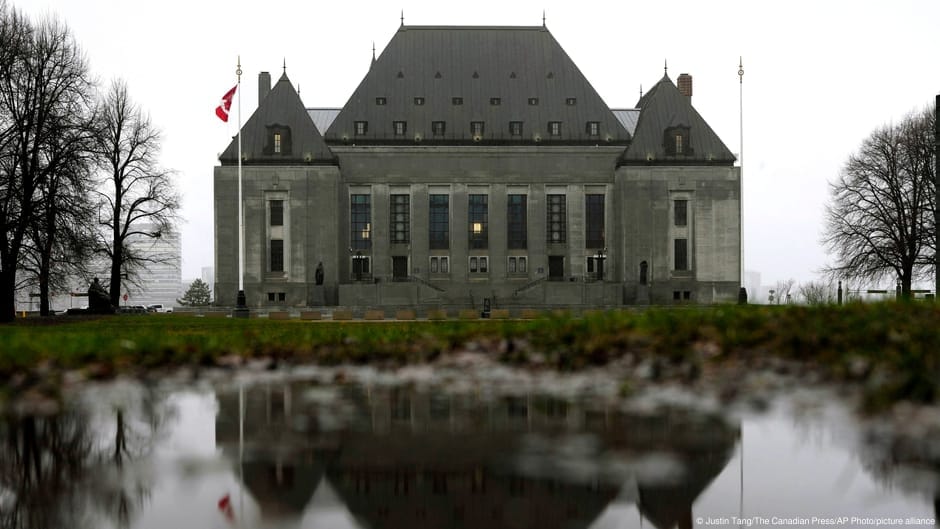
Canada's Supreme Court on Friday upheld Quebec's ban on religious symbols for public servants.
However, it ruled that provincial lawmakers should be allowed to wear religious symbols in the legislature, Quebec's National Assembly.
Quebec's government passed the bill, known as Bill 21, in 2019, arguing it was necessary to protect its secular society.
Under the law, anyone receiving public services like teachers and police officers has the right to do so without being exposed to overt religious symbols, including hijabs, turbans and yarmulkes.
Chief Justice Richard Wagner said that the law "is rooted in Quebec's legitimate and historical commitment to ensuring the (secularism) of the state in a free and democratic society."
Mathieu Levesque, the interim the right-wing Quebecois nationalist Future Quebec Coalition (CAQ) that passed the bill, hailed it as a "victory" for the French-speaking province.
"This is a victory for the Quebec nation and for [CAQ], whose actions have today been fully validated," he said.
CAQ ruled Quebec from in two parliamentary terms from 2018 to 2026, after which it failed to enter parliament and the pro-independence center-left Parti Quebecois (PQ), which also supported Bill 21, formed government.
The case was seen as a major test of how far provinces can go in defying provisions of the federal constitution by invoking the "notwithstanding clause,"