Uganda has begun clinical trials of an experimental vaccine targeting the Ebola strain responsible for the ongoing outbreak in the neighbouring Democratic Republic of Congo (DRC), the country's virus research institute announced on Friday.The outbreak, caused by the less common Bundibugyo strain of Ebola, has killed more than 5,700 people, with over 11,000 cases recorded since May, according to the World Health Organization (WHO). No vaccines or treatments are currently approved for this strain.Trials of two experimental vaccines are scheduled to begin on Monday in eastern DRC, the epicentre of the outbreak, targeting people who have been in contact with infected individuals and those considered at high risk of infection.Uganda has already begun testing one of the two vaccines, developed by US pharmaceutical company Moderna using the mRNA technology widely used during the COVID-19 pandemic.The Uganda Virus Research Institute said in a statement it had "launched Africa's first mRNA Phase I clinical trial... in collaboration with Moderna of an investigational vaccine against Bundibugyo ebolavirus".The study will involve 224 healthy volunteers aged between one and 65 to assess the vaccine's safety and its ability to trigger an immune response.Uganda, which shares a long and porous border with eastern DRC, managed to contain the spread of the virus after recording imported cases earlier this year.The country was declared Ebola-free in August after…
Uganda begins Africa's first mRNA Ebola vaccine trial
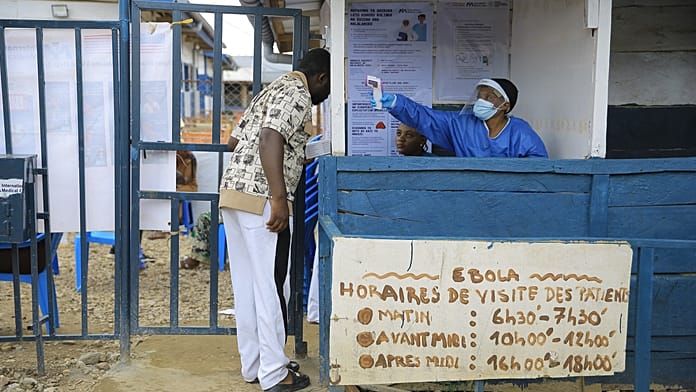
An experimental mRNA vaccine developed by Moderna is being tested on 224 volunteers in Uganda as health authorities seek to combat a deadly Ebola outbreak that has claimed thousands of lives in neighbouring DRC.
In brief
Uganda has begun clinical trials of an experimental vaccine targeting the Ebola strain responsible for the ongoing outbreak in the neighbouring Democratic Republic of Congo (DRC), the country's virus research institute announced on Friday.The outbreak, caused by the less common Bundibugyo strain of Ebola, has killed more than 5,700 people, with over 11,000 cases recorded since May, according to the World Health Organization (WHO). No vaccines or treatments are currently approved for this strain.Trials of two experimental vaccines are scheduled to begin on Monday in eastern DRC, the epicentre of the outbreak, targeting people who have been in contact with infected individuals and those con…
This is the opening of the story, shared with credit to Euronews. The rest of the report — with every detail — continues on the publisher’s website.
Continue reading at Euronews ↗