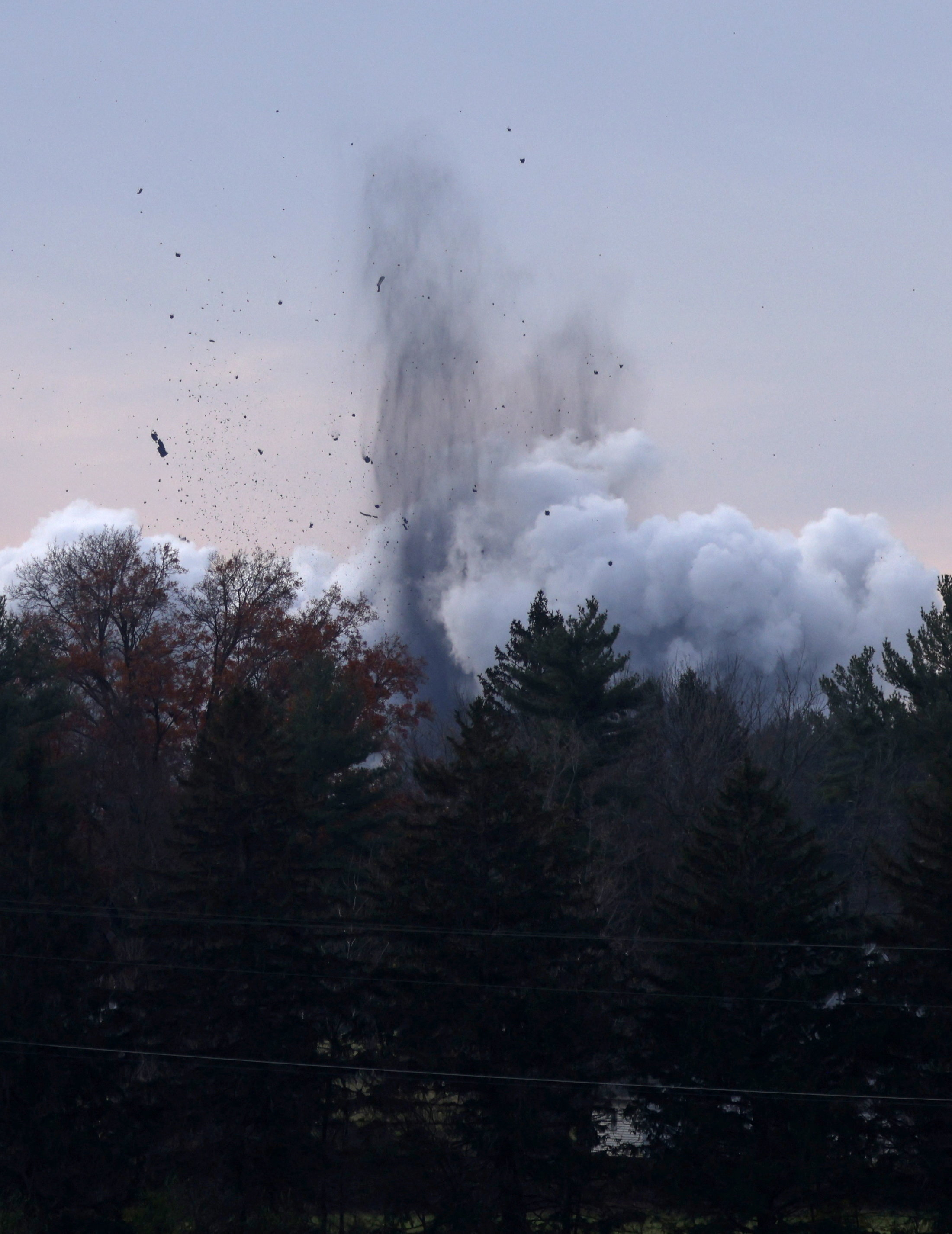
The detonation of the nation’s aging stockpile of lead azide, which spurred widespread concerns about potential environmental contamination, has been deemed a success by the US Army. But questions remain about how and when the federal government communicated its plans.
The US Environmental Protection Agency said about 300 people spent Thursday in the field sampling schools, playgrounds, churches and homes across the region. EPA expected to begin releasing preliminary results as early as Friday night.
More than 1,500 samples were taken of air, water, soil and dust before the detonation. After, they took hundreds of samples including from homes, parks and drinking water, the EPA has said.
So far, the EPA said there has continued to be “zero” airborne lead detected in the region since Wednesday’s controlled detonation.
While that’s reassuring, residents and some elected officials have criticized the Army for not being more transparent and providing more notice when it first determined the stockpile was unstable.
A notice that plant managers intended to neutralize the stockpile was posted on a government website last year in the fall. Growing concern led to a plant closure in March that was publicized, and an October public meeting warned that the chemicals would soon need to be detonated.
Residents in the tiny town of Middletown, where the Army stockpile was held, knew of…