📰 Newspapers

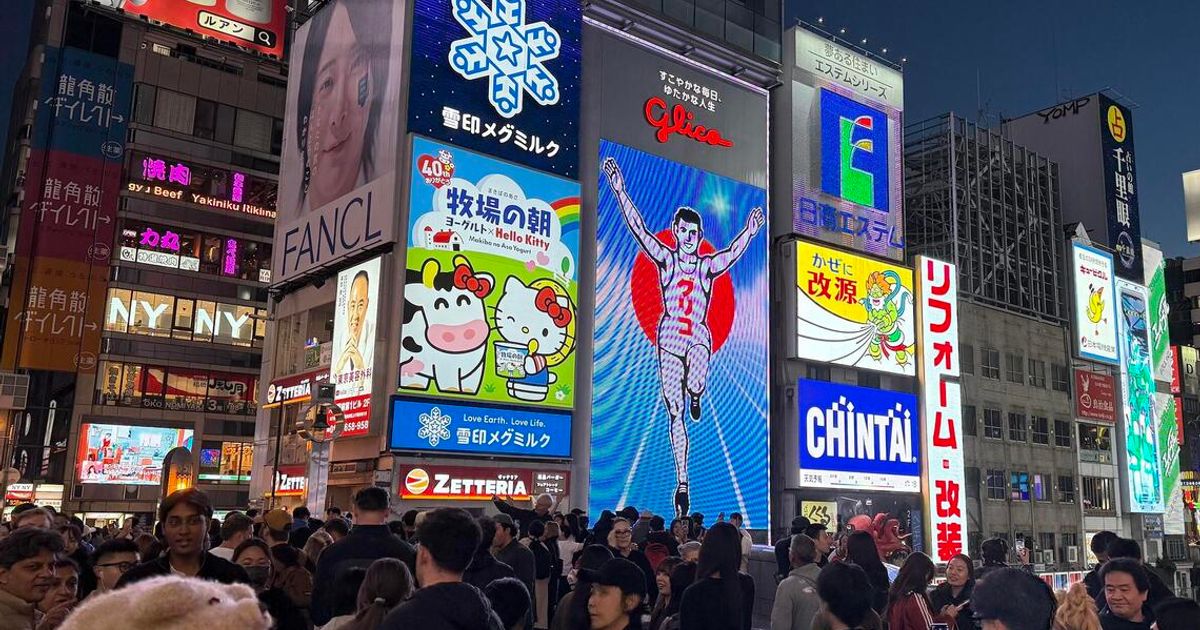
‘Not a mini-Tokyo’: Osaka bids to become Japan’s second capital

‘Not a mini-Tokyo’: Osaka bids to become Japan’s second capital

Fuelled by coalition politics and post-Expo momentum, the irreverent city is pitching itself as a counterweight to Tokyo.

OSAKA – The most obvious sign that Tokyo and Osaka are poles apart, despite being separated by only a 2½-hour ride on Japan’s shinkansen high-speed rail, is how people stand on escalators.

In Tokyo, people intuitively stand on the left. In Osaka, they stand on the right, ostensibly out of a refusal to do things “the Tokyo way”.

That fierce local pride – and a longstanding desire to break Tokyo’s monopoly on national life – has now moved to the centre of Japanese politics, with Osaka widely viewed as a shoo-in to become Japan’s secondary capital.

That is especially true given that the legislation itself was muscled onto the national agenda by the Osaka-based Japan Innovation Party (JIP), a regional force that seized an opportunity to partner with the ruling Liberal Democratic Party after the latter’s 26-year alliance with Komeito splintered in October 2025.

In July, Parliament approved a landmark law to create at least one “secondary capital”, or “backup capital”, that can take over government functions if a disaster paralyses Tokyo, a prefecture of 14 million people, nearly 10 million of whom live in its 23 core wards.

Under qualifying criteria approved by the Cabinet in October, a secondary capital must be a prefecture that accounts for at least 2.1% of national gross domestic product and has a city…

In brief

OSAKA – The most obvious sign that Tokyo and Osaka are poles apart, despite being separated by only a 2½-hour ride on Japan’s shinkansen high-speed rail, is how people stand on escalators. In Tokyo, people intuitively stand on the left. That fierce local pride – and a longstanding desire to break Tokyo’s monopoly on national life – has now moved to the centre of Japanese politics, with Osaka widely viewed as a shoo-in to become Japan’s secondary capital.

This is the opening of the story, shared with credit to The Straits Times — Asia. The rest of the report — with every detail — continues on the publisher’s website.

Continue reading at The Straits Times — Asia ↗

Cookie settings

Choose which cookies we may use. You can change this at any time from Cookie settings in the footer. Details of each cookie are in the Cookie Policy.

Strictly necessary

Needed for sign-in, security, payments and remembering these choices. Always on.

Preferences

Remember settings such as dark mode.

Analytics & performance

Help us count visits, understand which pages, devices and countries our readers use, and measure how well the site performs – anonymous and aggregated.

Advertising & marketing

Lets advertising partners show and personalise adverts, measure impressions, clicks and visits, prevent ad fraud and pay us – this is how the free site is funded.

🔔 News notifications

Get headlines from NewsHub on this device — even when the site is closed.

You can switch this off at any time. Works on Android, Windows, Mac and Linux browsers; on iPhone/iPad add the site to your Home Screen first.