📰 Newspapers

No phone, no problem: How students in China are folding microdramas out of paper

No phone, no problem: How students in China are folding microdramas out of paper

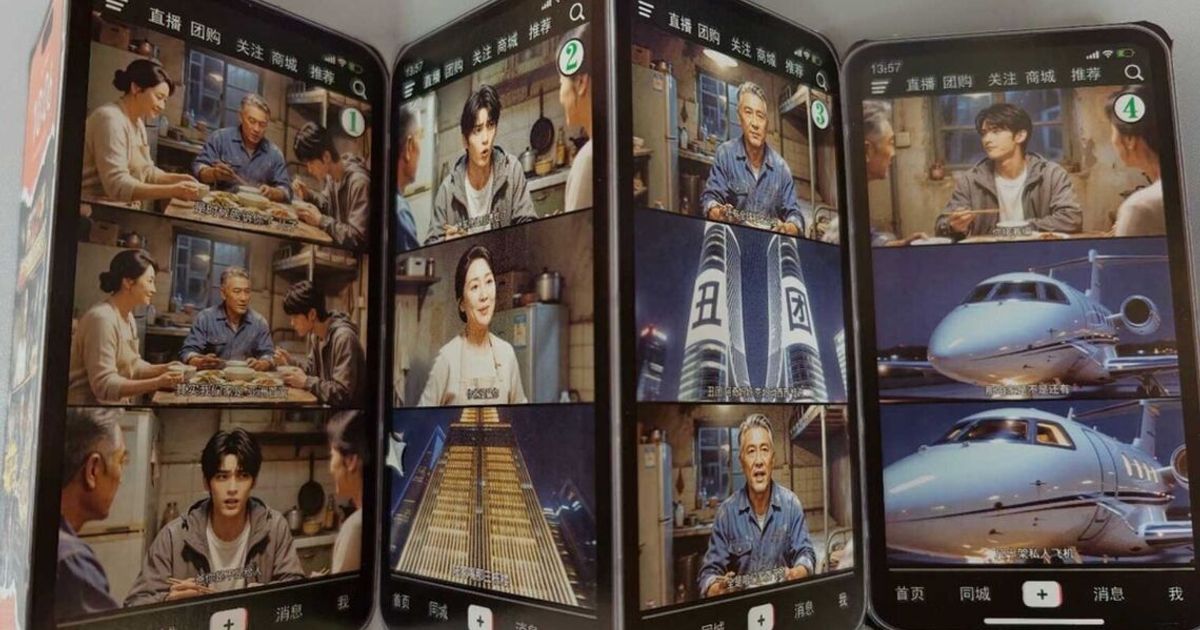
Students read printouts of short-drama scenes after classroom phone bans.

Microdramas are taking over screens everywhere. But what happens if you can’t get your dopamine hit?

For some students in China, you simply make one out of paper.

The result is a half-metre-long printout of scenes from short dramas, folded into the shape of a mobile phone – known as “paper short-form dramas”.

This creative workaround was born out of necessity.

In China, several regions – including Chongqing, Guangzhou, Zhengzhou and Fujian – have moved to ban primary and secondary school students from bringing mobile phones onto campuses.

Announced in October 2025, the classroom bans stemmed from growing concerns over disruption and the impact of excessive phone use on students’ development.

Yet, it is difficult to deter stubborn, innovative students who, much like adults, can get hooked on minute-long microdramas. Originating in China, these dramas feature fast-paced plots and cliffhangers built for quick viewing on 9:16 vertical screens.

Locked out of their devices in class, some students are turning to the pocket-sized printouts styled like a phone showing a drama’s cover page – complete with a lock screen time and a battery level that never changes.

Unfold the paper short-form drama, and a half-metre strip made from thin cardboard reveals scenes, dialogues and even comment sections from popular shows.

In brief

Microdramas are taking over screens everywhere. For some students in China, you simply make one out of paper. The result is a half-metre-long printout of scenes from short dramas, folded into the shape of a mobile phone – known as “paper short-form dramas”. Unfold the paper short-form drama, and a half-metre strip made from thin cardboard reveals scenes, dialogues and even comment sections from popular shows.

This is the opening of the story, shared with credit to The Straits Times — Asia. The rest of the report — with every detail — continues on the publisher’s website.

Continue reading at The Straits Times — Asia ↗

Cookie settings

Choose which cookies we may use. You can change this at any time from Cookie settings in the footer. Details of each cookie are in the Cookie Policy.

Strictly necessary

Needed for sign-in, security, payments and remembering these choices. Always on.

Preferences

Remember settings such as dark mode.

Analytics & performance

Help us count visits, understand which pages, devices and countries our readers use, and measure how well the site performs – anonymous and aggregated.

Advertising & marketing

Lets advertising partners show and personalise adverts, measure impressions, clicks and visits, prevent ad fraud and pay us – this is how the free site is funded.

🔔 News notifications

Get headlines from NewsHub on this device — even when the site is closed.

You can switch this off at any time. Works on Android, Windows, Mac and Linux browsers; on iPhone/iPad add the site to your Home Screen first.