

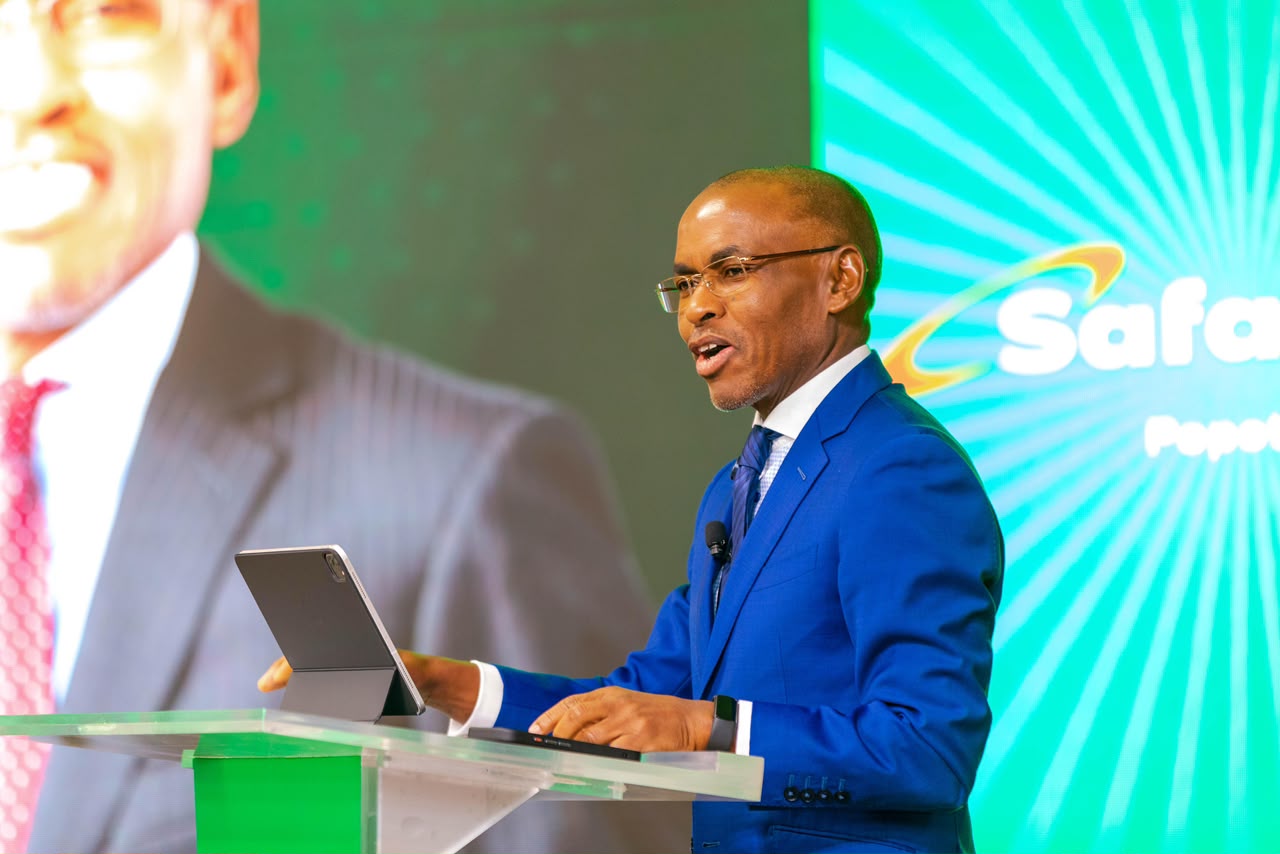
Safaricom's ability to sustain its position in Kenya's telecommunications market increasingly depends on how much business it can build around its existing customer relationships. Mobile connectivity remains the foundation, but financial services, merchant payments, fixed broadband, enterprise technology and regional expansion now account for a larger part of the company's growth strategy. Peter Ndegwa, Safaricom's chief executive, outlined this approach during the Lagos Business School Chief Executive Programme at Strathmore Business School in Nairobi on November 20, 2026. His discussion with executives from eight Nigerian businesses centred on defending a dominant market position through customer value creation, organisational agility and continued investment in adjacent businesses.
The financial results behind that strategy show the scale of the operation. Safaricom Group recorded KSh414.1 billion in service revenue for FY26, equivalent to approximately US$3.2 billion, with 71.6 million customers across Kenya and Ethiopia. In Kenya, the company held 69% of the mobile market and 89% of the mobile money market, according to Communications Authority figures for June 2026.
Maintaining that position requires the company to manage a business whose services have become part of everyday commercial activity. M-PESA processed more than 46 billion transactions during FY26, while its total transaction value reached KSh41.7 trillion, approximately 2.4 times Kenya's GDP.


