📰 Newspapers

Food for feed: The price paid beyond the plate

Food for feed: The price paid beyond the plate

Much of the fishmeal and fish oil that support imported farmed seafood consumed in the Philippines comes from global supply chains linked to pollution, labor abuses, overfishing, and food insecurity in other countries

In May 2025, a regional office of the Philippines’ fisheries agency in Visayas announced an initiative that would invite fishers to government meetings held to expand fish farming in the region.

Officials would introduce the fishers to ongoing fish breeding, processing, and distribution projects as part of a push to transform the local economy “from fish hunting to fish farming.” They emphasized that this transformation would ease stress on the ecosystem.

“Instead of constantly taking from the sea, let’s try to cultivate fish and give the ocean a chance to recover,” said community development officer Joel Lutao.

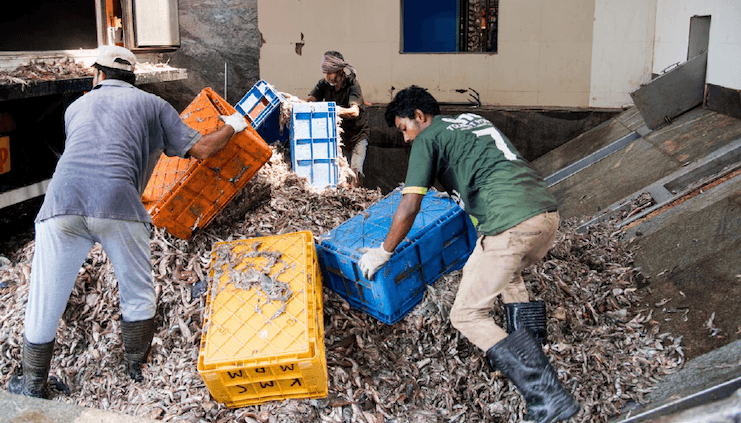
But critics worldwide have questioned whether the practice of catching and reducing whole, fresh fish to grow more seafood can ever be considered sustainable. The most popular types of farmed seafood — milkfish, tilapia, salmon, shrimp, and trout — are fed the kinds of wild fish that aquaculture claims to be saving, thereby accelerating ocean depletion, not slowing it.

Two-thirds of global aquaculture grows species that are fed fishmeal and fish oil. Before it reaches market, a farmed salmon, for instance, eats at some farms more than six times its weight in wild-caught fish.

The concerns about aquaculture extend far beyond the fate of the oceans.

In brief

In May 2025, a regional office of the Philippines’ fisheries agency in Visayas announced an initiative that would invite fishers to government meetings held to expand fish farming in the region. Officials would introduce the fishers to ongoing fish breeding, processing, and distribution projects as part of a push to transform the local economy “from fish hunting to fish farming.

This is the opening of the story, shared with credit to Rappler (Philippines). The rest of the report — with every detail — continues on the publisher’s website.

Continue reading at Rappler (Philippines) ↗

Cookie settings

Choose which cookies we may use. You can change this at any time from Cookie settings in the footer. Details of each cookie are in the Cookie Policy.

Strictly necessary

Needed for sign-in, security, payments and remembering these choices. Always on.

Preferences

Remember settings such as dark mode.

Analytics & performance

Help us count visits, understand which pages, devices and countries our readers use, and measure how well the site performs – anonymous and aggregated.

Advertising & marketing

Lets advertising partners show and personalise adverts, measure impressions, clicks and visits, prevent ad fraud and pay us – this is how the free site is funded.

🔔 News notifications

Get headlines from NewsHub on this device — even when the site is closed.

You can switch this off at any time. Works on Android, Windows, Mac and Linux browsers; on iPhone/iPad add the site to your Home Screen first.