

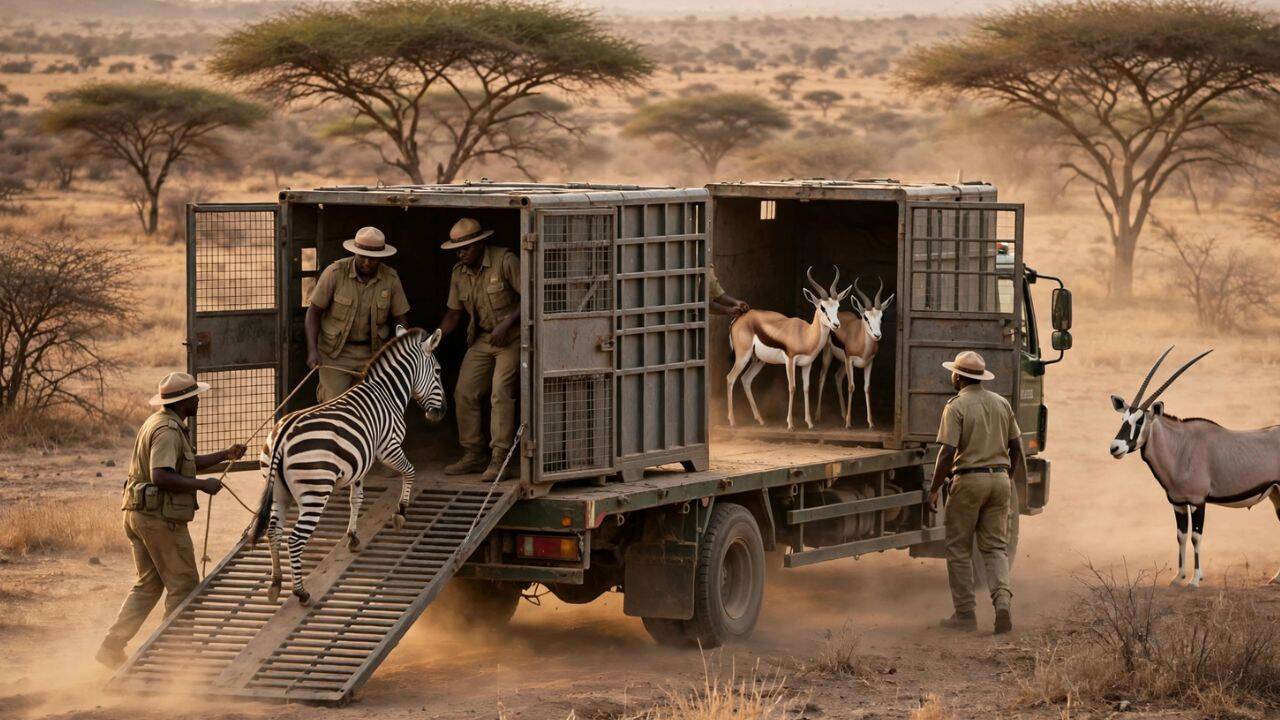
Namibia has moved 575 wild animals from Etosha National Park to conservancies in three regions as part of an effort to restore wildlife populations affected by drought. The animals were sent to destinations in Kunene, Otjozondjupa and Omusati, with the operation that took place over around 8 days in June 2026. The translocation involved springboks, gemsboks and plain zebras, distributed among the Kunene region, Nyae Nyae Conservancy and Uukwaluudhi. The exercise also sought to increase biodiversity, provide prey for predators such as lions, and reduce human-wildlife conflict.According to The Namibian, the translocations took place between 22 and 29 June. The Ministry of Environment and Tourism also outlined further animal movements planned for the coming months as part of future conservation work.How did Namibia translocate 575 wild animals from Etosha National ParkThe largest group moved to the Kunene region consisted of 256 springboks and 190 gemsboks. A further 90 plain zebras were translocated to Nyae Nyae Conservancy, while Uukwaluudhi received 15 gemsboks and 24 plain zebras. Together, the five groups account for all 575 animals covered by the June operation.The destinations were in the Kunene, Otjozondjupa and Omusati regions, according to the ministry. The figures show how the animals were divided between the receiving areas and which species were included at each location.What were the aims of Namibia's wildlife translocation exerciseThe…
Namibia moved 575 animals from drought-hit Etosha to restore wildlife populations
In brief
Namibia has moved 575 wild animals from Etosha National Park to conservancies in three regions as part of an effort to restore wildlife populations affected by drought. The translocation involved springboks, gemsboks and plain zebras, distributed among the Kunene region, Nyae Nyae Conservancy and Uukwaluudhi. A further 90 plain zebras were translocated to Nyae Nyae Conservancy, while Uukwaluudhi received 15 gemsboks and 24 plain zebras.
This is the opening of the story, shared with credit to The Times of India — World. The rest of the report — with every detail — continues on the publisher’s website.
Continue reading at The Times of India — World ↗