It was the kind of catch that could make even the brightest autumn leaves look dull. Scientists surveying a harbour on the shores of Lake Ontario pulled up a fish that looked unlike the burbot they were accustomed to seeing, its body was an intense yellow-orange instead of the species’ usual earthy, mottled shades.The unusual fish was caught by biologists from the US Fish and Wildlife Service (USFWS) during a routine aquatic invasive species survey in Oswego Harbor, New York, in October. The agency described it as a “one-in-a-million” discovery, saying the fish’s rare pigmentation made it an especially unusual find. The discovery was announced on November 10.The fish was a burbot (Lota lota), a native freshwater species also known as ling or eelpout. Its striking colour was attributed to xanthochromism, a rare biological condition that produces an unusually saturated yellow or orange appearance. According to the USFWS, the condition is associated with a genetic mutation that suppresses normal pigmentation, allowing yellow pigment to dominate. It is considerably less common in wild fish than albinism, which causes unusually pale or white colouring, or melanism, which produces darker pigmentation.Although the colour made the fish stand out, its presence in the harbour was significant for another reason.
Scientists catch ‘one-in-a-million’ bright yellow burbot in New York harbor; rare fish may help explain species’ decline
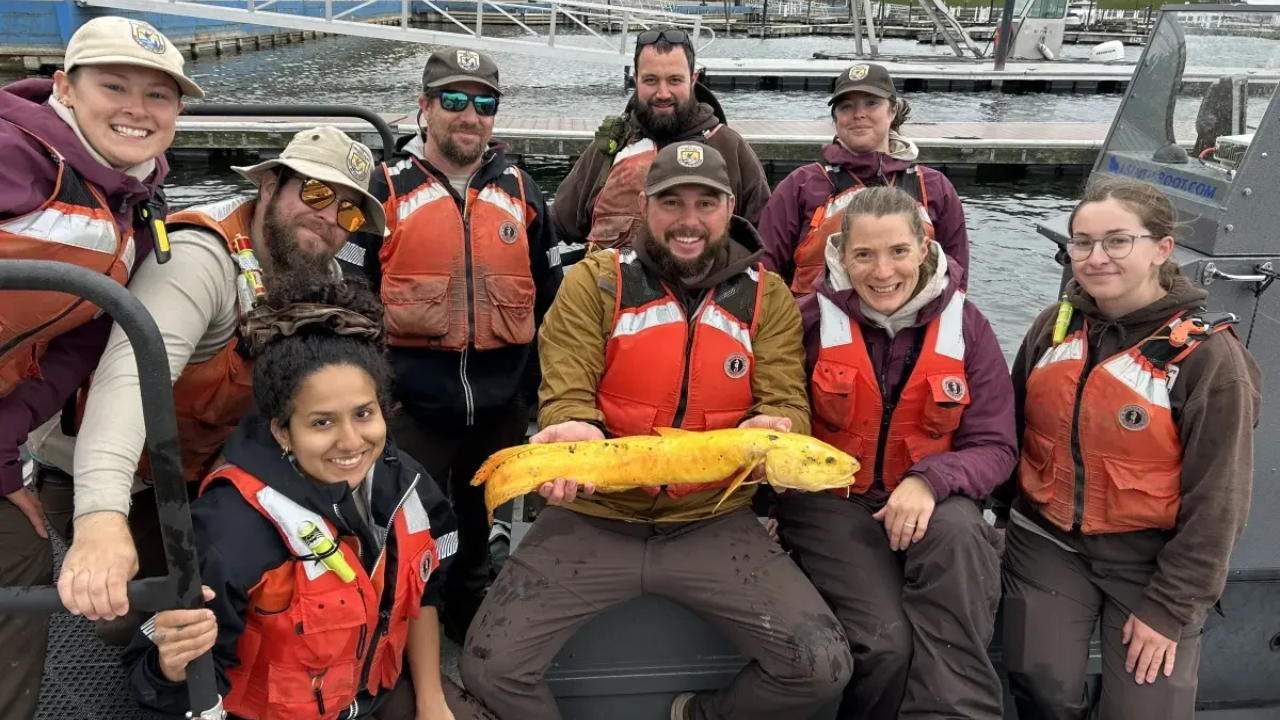
During a standard survey, scientists made a surprising discovery—a rare yellow burbot in Lake Ontario. This unique fish exhibits a genetic mutation called xanthochromism, which causes its vibrant coloration. Unfortunately, it was in poor condition, suffering from carcinoma and a parasitic infection. These findings offer valuable insights into the overall health of the area's burbot populations, prompting further…
In brief
It was the kind of catch that could make even the brightest autumn leaves look dull. Scientists surveying a harbour on the shores of Lake Ontario pulled up a fish that looked unlike the burbot they were accustomed to seeing, its body was an intense yellow-orange instead of the species’ usual earthy, mottled shades.The unusual fish was caught by biologists from the US Fish and Wildlife Service (USFWS) during a routine aquatic invasive species survey in Oswego Harbor, New York, in October.
This is the opening of the story, shared with credit to The Times of India — World. The rest of the report — with every detail — continues on the publisher’s website.
Continue reading at The Times of India — World ↗