To be an activist in the years immediately after the 1986 EDSA Revolution meant sailing against the optimistic tide that swept the nation following the ouster of the Marcos dictatorship. Democracy had been restored, Cory Aquino was president, and the mood was blazing yellow. Everyone, it seemed, wanted to move on and celebrate.
And to be a protest musician at a time when vacuous pop, delivered by singers and bands with gelled hair and shoulder pads, ruled the airwaves meant strumming an acoustic guitar in the middle of Euphoria: nobody could hear you, and those who did wished you weren’t there.
They played on anyway.
Protest musicians of the post-EDSA years did not come out of nowhere. They followed a tradition of protest artists from the ’70s and early ’80s whose songs were in the form and vernacular of folk and folk-rock: Jess Santiago, Paul Galang, Susan Fernandez, Pancho Lara, Gary Granada; folk groups like Pahayagan and Sinaglahi. Asin and Heber Bartolome’s Banyuhay carried it into the mainstream, proving that a song about the environment, or the daily struggles of working people could sell records.
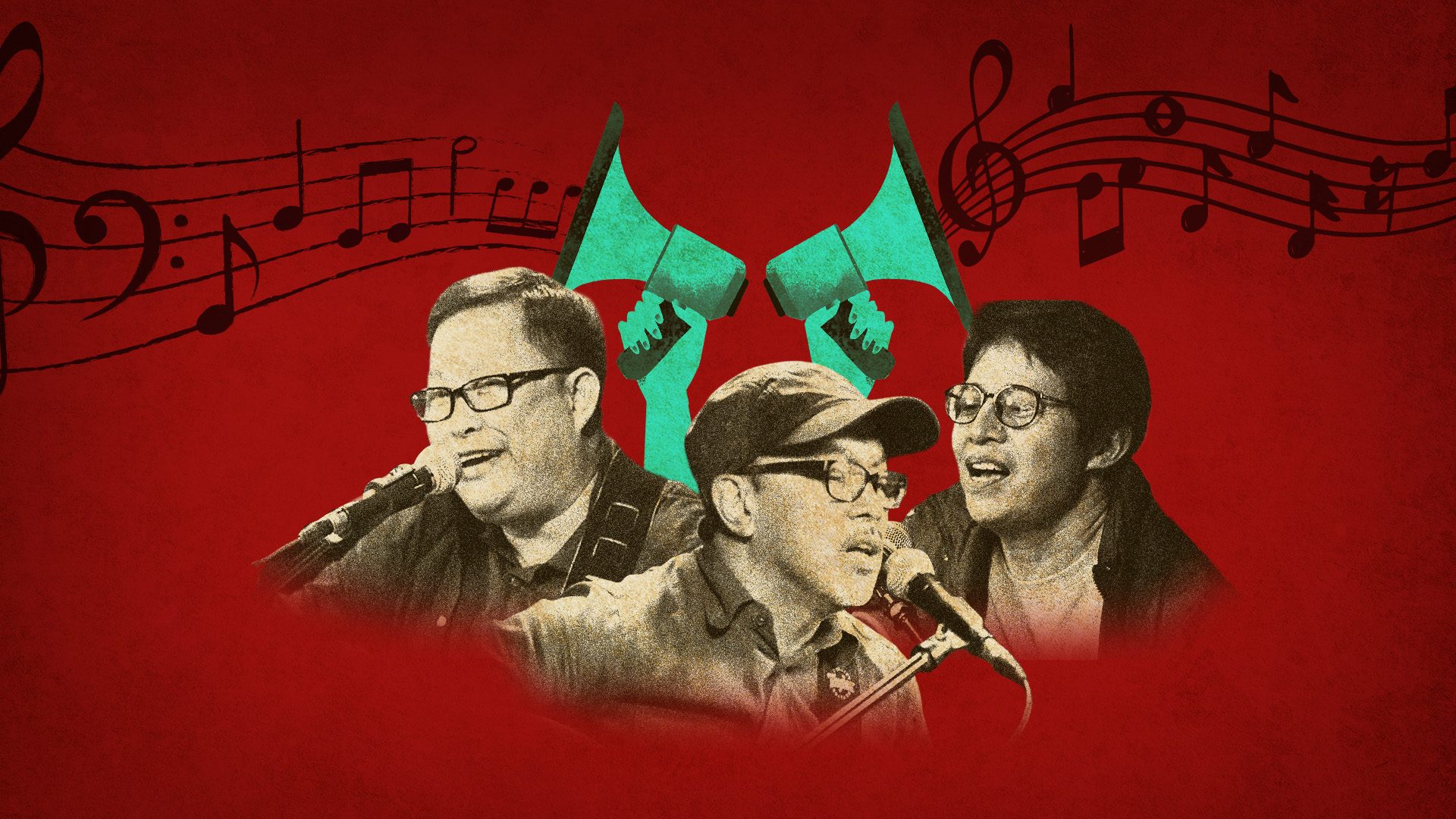
The folk group Buklod was that period’s best-kept secret.
Noel Cabangon, Romeo Dongeto, and Rene Boncocan sang at political gatherings long before anyone thought of them as recording artists.