Walking through the halls of the European institutions in Brussels these days, it feels as if people are whispering about the end of an era. What happens when one of the most vocal leaders of Europe's center left is no longer at the table?
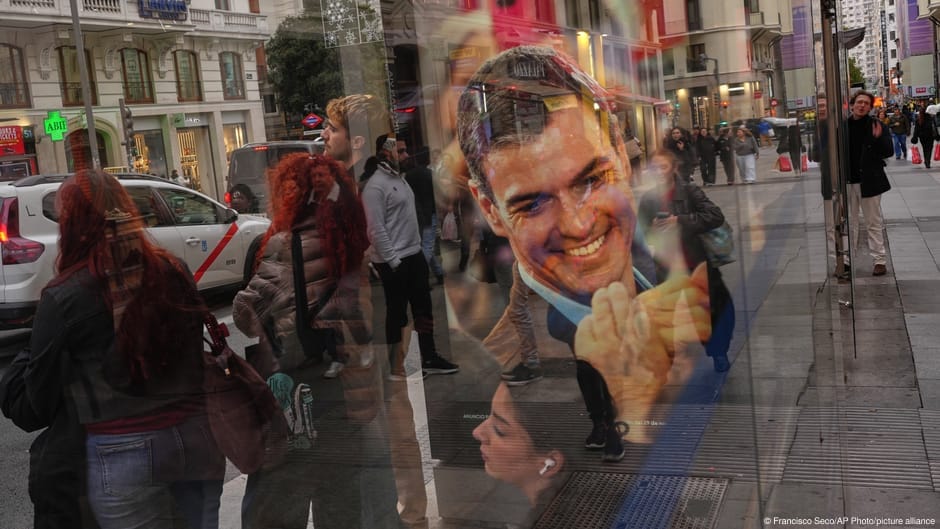
Pedro Sanchez is one of the few social democratic prime ministers left in the European Union, and Spain is the largest member state still led by one. That's why this election raises questions that go beyond who governs in Madrid.
After more than eight years in office Sanchez called a snap election at the beginning of October, three days after parliament rejected two emergency decrees aimed at tackling Spain's housing crisis. Anger over soaring housing costs has brought protesters onto the streets nationwide this year.
Sanchez's minority government was already under pressure over its handling of the summer migration crisis in Ceuta and accusations of corruption against his party and his wife, which both he and his wife have denied.
Polls on Monday predicted a tight race, putting the conservative People's Party (PP) at around 32% and the Socialists led by Sanchez at 31%.
With the right-wing populist Vox party in third place at around 17%, the polling projected an absolute majority for the PP and Vox combined.