

Want to bookmark your favourite articles and stories to read or reference later? Start your Independent Membership today.
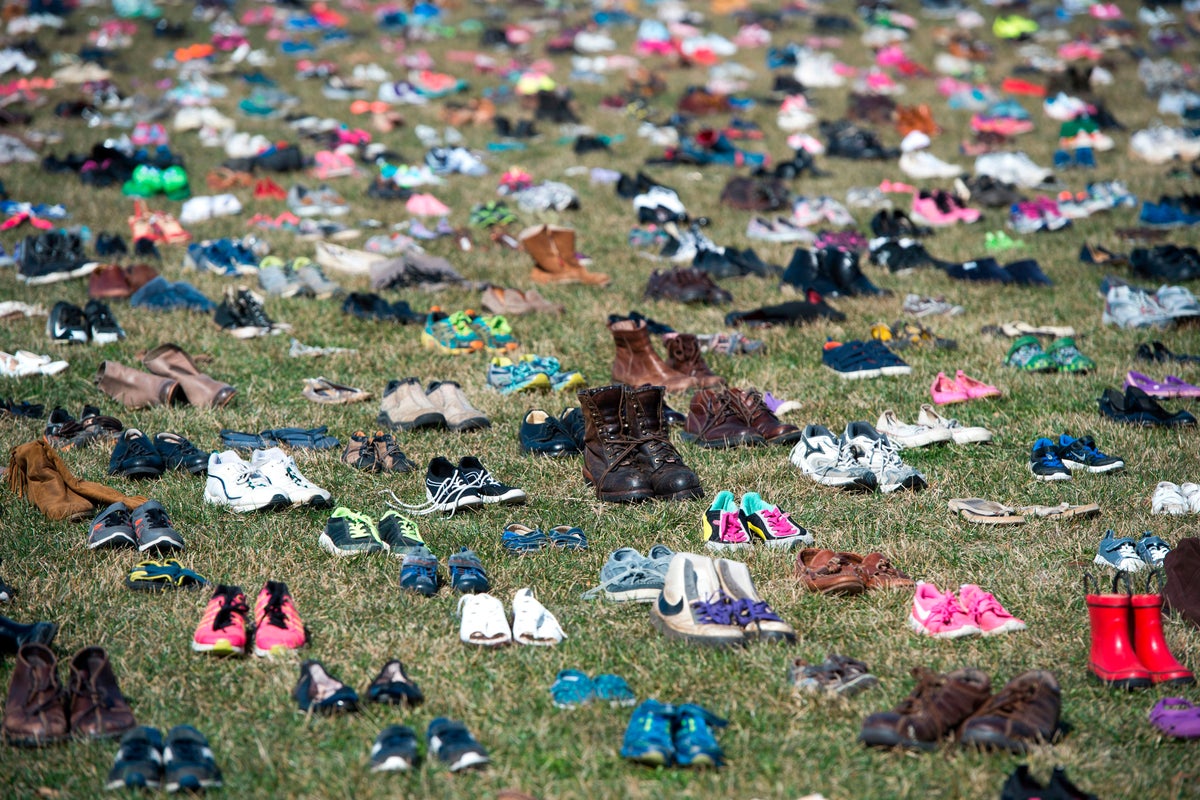
Among the nation’s many mass shootings, the massacre of December 14, 2012, at Sandy Hook Elementary School in Newtown, Connecticut, remains uniquely horrific.
Within under five minutes, a single gunman discharged 154 rounds, claiming the lives of 20 first-grade schoolchildren, aged 6 and 7, alongside 6 adults.
Following the deadliest elementary school shooting in US history, Connecticut legislators reacted swiftly by expanding the state’s prohibition on what it defines as "assault weapons" to incorporate the AR-15 and similar semiautomatic rifles like the one used by the Sandy Hook gunman.
Almost 14 years on, the U.S. Supreme Court is scheduled to hear oral arguments on Wednesday in a case that could dismantle that ban and declare a right under the US Constitution to possess firearms such as the AR-15.
Currently, 11 U.S. states and Washington, DC, prohibit the AR-15 and comparable weapons.
To Nicole Hockley, whose 6-year-old son Dylan was killed at Sandy Hook — shot five times in the torso and head — the prospect of the Supreme Court overturning the law born from the loss of children in her community evokes anger.
"This would basically be saying, 'We don't care what happened at Sandy Hook.