

The first ski lifts on Germany’s Zugspitze (source in German) began operating on Friday, officially marking the start of the ski season – and with it, avalanche season.Temperatures on the Zugspitze are currently around -7°C, with a monitoring station at an altitude of approximately 2,070 metres recording a snow depth of 47cm. On the nearby Nebelhorn, the snow is already 67cm deep.Older layers of snow and wind can contribute to the formation of unstable layers within the snowpack and accumulations of windblown snow, both of which are among the most common causes of avalanches."By the time you see an avalanche coming towards you, it is usually too late to react," Thomas Feistl, head of the Bavarian Avalanche Warning Service (source in German), told Euronews. He explained that people often trigger avalanches themselves, making prevention particularly important.Fatal avalanches are often triggered by people skiing, snowboarding or snowshoeing away from marked and secured pistes. The most common type in such cases is known as a slab avalanche. But how does it occur?Throughout the winter, successive layers of snow build up, some compact and others loose and unstable. The weight of a skier can cause a weak layer within the snowpack to collapse, triggering a fracture that rapidly spreads across the slope.
Avalanche season begins on Germany’s Zugspitze as experts urge swift rescues
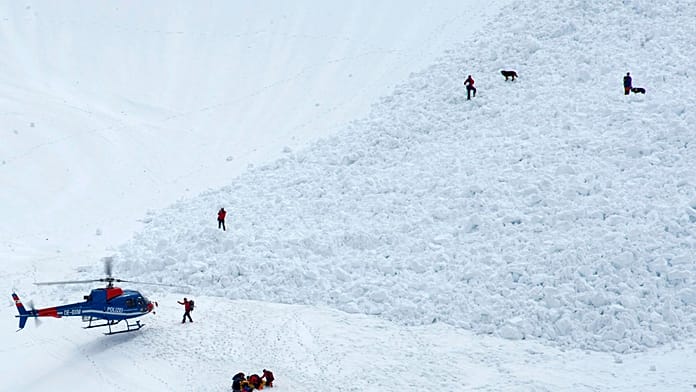
An avalanche can turn fatal within seconds. Around 40 people are killed in avalanches each year across Germany, Austria and Switzerland, with many more buried beneath the snow. Avalanche expert Thomas Feistl explains what it takes to survive.
In brief
The first ski lifts on Germany’s Zugspitze (source in German) began operating on Friday, officially marking the start of the ski season – and with it, avalanche season.Temperatures on the Zugspitze are currently around -7°C, with a monitoring station at an altitude of approximately 2,070 metres recording a snow depth of 47cm. He explained that people often trigger avalanches themselves, making prevention particularly important.Fatal avalanches are often triggered by people skiing, snowboarding or snowshoeing away from marked and secured pistes.
This is the opening of the story, shared with credit to Euronews. The rest of the report — with every detail — continues on the publisher’s website.
Continue reading at Euronews ↗