📰 Newspapers

Food for feed: Fish farming and the struggle to police seafood supply chains

Food for feed: Fish farming and the struggle to police seafood supply chains

As overfishing and climate change shrink local catches, the Philippines is turning to aquaculture as a solution. But expanding fish farms could deepen reliance on fishmeal, a feed ingredient tied to labor abuse, depleted fisheries, illegal fishing, and food insecurity.

PART 1 | Food for feed: The price paid beyond the plate

An archipelago nation consisting of more than 7,000 islands, the Philippines has at least 22,000 miles of coastline and a fishing fleet of roughly 5,000 commercial fishing vessels. Seafood — especially wild-caught, more than farm-raised — is the most popular form of animal protein, above chicken, beef, and pork.

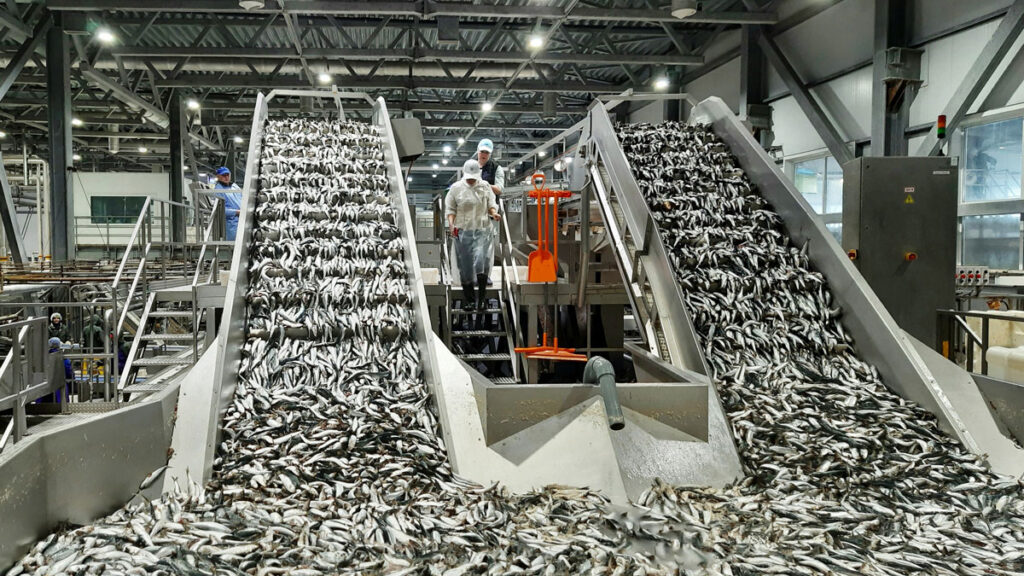
Small species like sardines and scad have always been staples in poorer Filipino households. In the past few decades, however, overfishing and climate change have made these fish less accessible, and Philippine seafood companies have aimed to reroute seafood for export rather than domestic consumption.

Experts say this is cause for concern because the need for more affordable sources of protein has never been greater. By 2050, the Philippines’ population is projected to reach at least 150 million, increasing demand for fish by more than 1.6 million tons annually, according to a 2023 study in The Philippine Journal of Fisheries.

Many of the fishers who supply the country’s fishmeal plants work in exploitative arrangements. The majority of the crew on tuna handliners and purse seiners in the Philippines, for example, worked under some form of debt bondage to pay back cash loans or advances, according to a study by Safe Seas.


In brief

PART 1 | Food for feed: The price paid beyond the plate An archipelago nation consisting of more than 7,000 islands, the Philippines has at least 22,000 miles of coastline and a fishing fleet of roughly 5,000 commercial fishing vessels. In the past few decades, however, overfishing and climate change have made these fish less accessible, and Philippine seafood companies have aimed to reroute seafood for export rather than domestic consumption.

This is the opening of the story, shared with credit to Rappler (Philippines). The rest of the report — with every detail — continues on the publisher’s website.

Continue reading at Rappler (Philippines) ↗

Cookie settings

Choose which cookies we may use. You can change this at any time from Cookie settings in the footer. Details of each cookie are in the Cookie Policy.

Strictly necessary

Needed for sign-in, security, payments and remembering these choices. Always on.

Preferences

Remember settings such as dark mode.

Analytics & performance

Help us count visits, understand which pages, devices and countries our readers use, and measure how well the site performs – anonymous and aggregated.

Advertising & marketing

Lets advertising partners show and personalise adverts, measure impressions, clicks and visits, prevent ad fraud and pay us – this is how the free site is funded.

🔔 News notifications

Get headlines from NewsHub on this device — even when the site is closed.

You can switch this off at any time. Works on Android, Windows, Mac and Linux browsers; on iPhone/iPad add the site to your Home Screen first.