

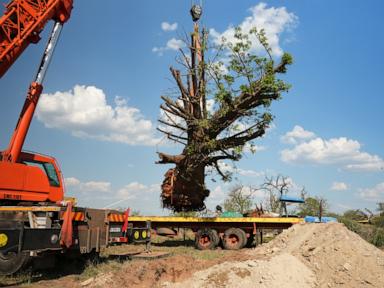
Baobab trees are one of Africa’s iconic species
TIMBAVATI NATURE RESERVE, South Africa -- Five large baobab trees have been transported nearly 1,000 kilometers (621 miles) and replanted in their natural habitat in northern South Africa in a last-ditch effort to save them. The centuries-old trees had been uprooted without authorization and taken to a port for export.
Environment Ministry officials found the protected baobabs — one of Africa’s iconic species — in July, lying on their sides in a freight company’s parking lot in the port city of Durban in eastern South Africa. They were replanted earlier this month in the privately owned Timbavati Nature Reserve near South Africa’s famous Kruger National Park.
The ministry and the Baobab Foundation conservation group led an operation involving oversized trucks and cranes to rescue the trees, but it remains uncertain whether they will survive the stress of being out of the ground for months.
Despite having their roots and branches cut and spending at least four months on tarmac before their transfer could be organized, the resilient trees began to sprout leaves.
That gave officials renewed hope that they could save them.
Baobabs, with their thick trunks and root-like branches that make them look as if they are upside down, can live for 1,000 years in dry environments because they store water…