

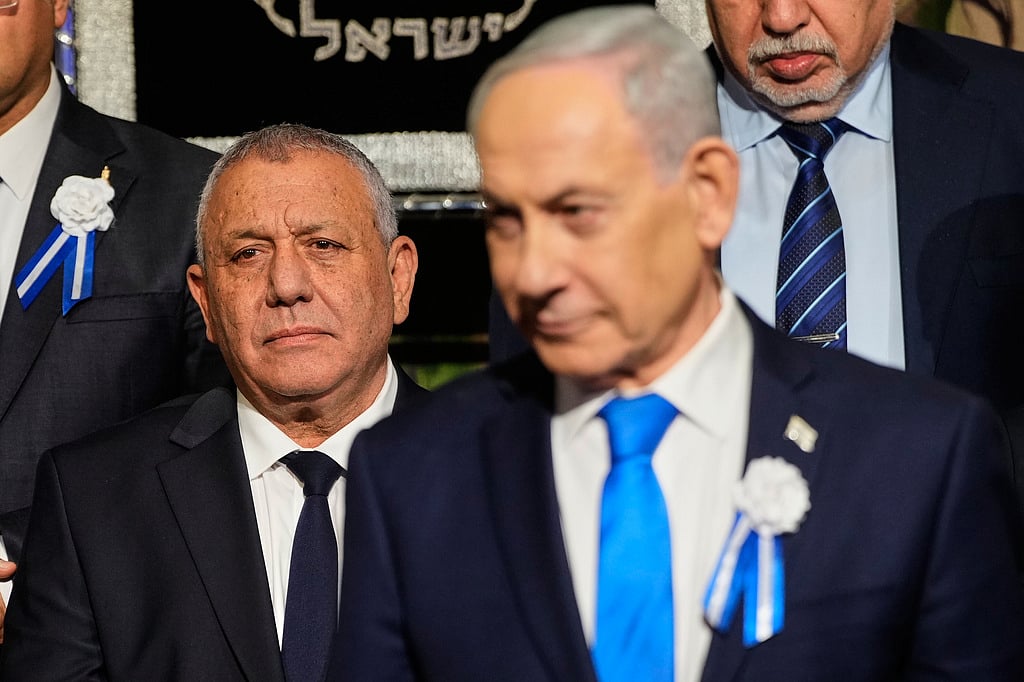
Dubai: For a politician who has dominated Israeli politics for much of the past three decades, Benjamin Netanyahu’s offer to let his principal rival serve first as prime minister marks an extraordinary concession.
Israel’s longest-serving leader, who has repeatedly overcome political crises and electoral setbacks, is offering to temporarily relinquish the premiership rather than risk being excluded from government altogether.
On Saturday, Netanyahu proposed a power-sharing arrangement under which Gadi Eisenkot, a former military chief who campaigned to remove him from office, would serve first as prime minister.
The two leaders began negotiations on Sunday at Israel’s defence headquarters in Tel Aviv, according to the Times of Israel.
Political analysts told The New York Times that Netanyahu’s concession reflected mounting pressure as his opponents advanced efforts to replace him, although Eisenkot still faced the challenge of holding together his politically divided bloc.
But why is Netanyahu so determined to remain in government, even if it means surrendering the top job?
The prospect of losing power
The October 27 elections deprived Netanyahu’s coalition of its majority, leaving his bloc with 53 seats in the 120-member Knesset.
Eisenkot’s bloc secured 48 seats, while Arab parties won a combined 19, giving them potentially decisive influence over government formation.
Reuters reported that Netanyahu’s concession came as Eisenkot made progress towards assembling an alternative government…