

While some of us struggle to find routes without maps, a single-celled blob is out there navigating mazes without a brain, neurons or even a nervous system!Physarum polycephalum is a slime mould that is challenging what we think it takes to be intelligent. This brainless organism can explore its surroundings, identify efficient routes to food and reorganise its network to solve problems. It doesn't think, plan or calculate in any conventional sense. Yet somehow, it gets the job done.According to a report published by Phys.org on November 25, 2026, researchers Ricard Solé and Jordi Pla-Mauri of Pompeu Fabra University in Barcelona, Spain, have developed a mathematical framework to explain how seemingly intelligent behaviour could emerge from an organism's physical properties. They argue that having a brain is not necessarily crucial for certain forms of problem-solving, which can instead be explained through a physical principle known as the 'principle of least action'. This principle may help explain how the slime mould reorganises its network to find efficient routes without needing a central nervous system.A single cell knows its wayFor us humans, myriads of cells have to come together to help us navigate, process information and function. But for a single-celled organism like Physarum polycephalum, things work rather differently.
How does a brainless slime mold find the shortest path through a maze?
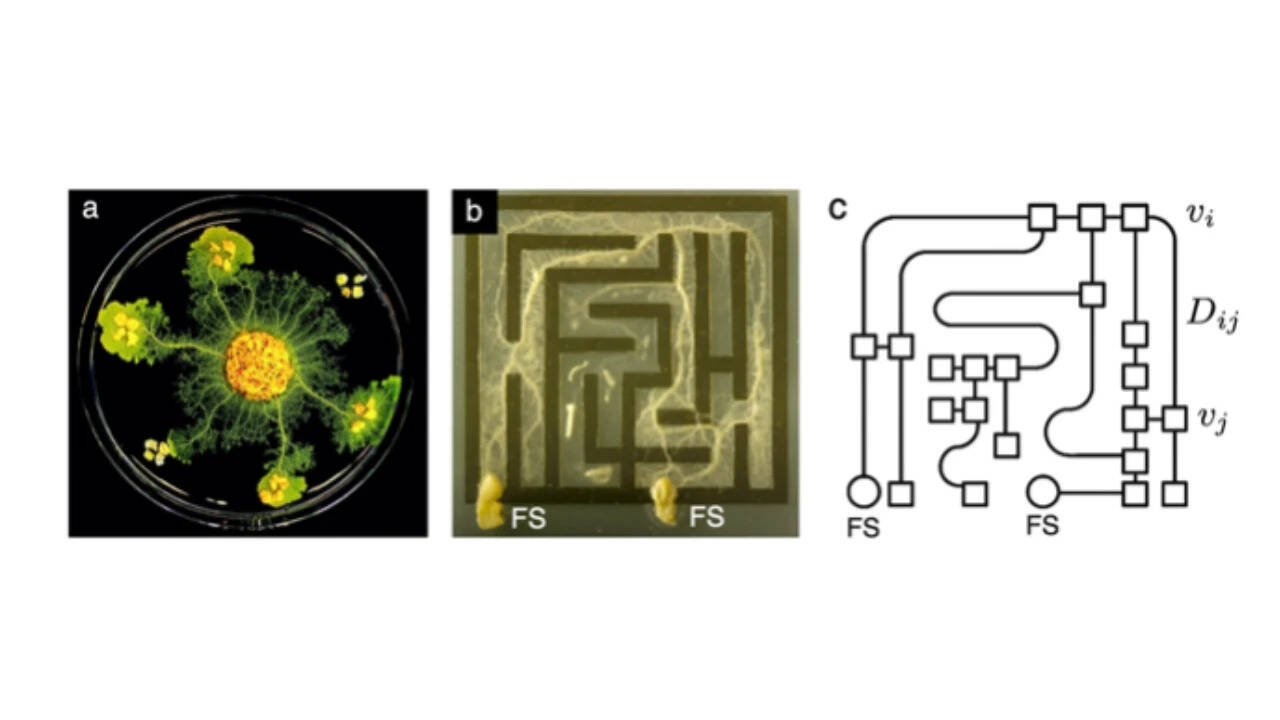
At Pompeu Fabra University, scientists have explored the fascinating navigation strategies of the slime mould Physarum polycephalum, revealing its maze-solving abilities despite the absence of a nervous system. The research indicates that this organism rearranges its network of tubes to better transport nutrients and select efficient routes. Employing mathematical frameworks, the study attributes these capabilities…
In brief
While some of us struggle to find routes without maps, a single-celled blob is out there navigating mazes without a brain, neurons or even a nervous system!Physarum polycephalum is a slime mould that is challenging what we think it takes to be intelligent. But for a single-celled organism like Physarum polycephalum, things work rather differently.
This is the opening of the story, shared with credit to The Times of India — World. The rest of the report — with every detail — continues on the publisher’s website.
Continue reading at The Times of India — World ↗