

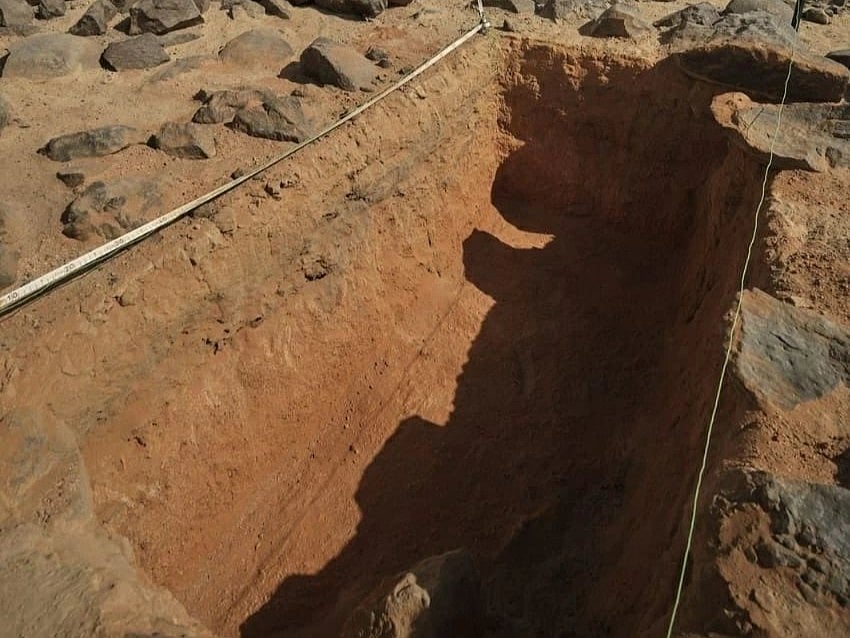
Dubai: An Egyptian-Italian archaeological mission has uncovered an 8,500-year-old human settlement in Egypt’s Western Desert, revealing new evidence of prehistoric communities that lived in the region when the Sahara was considerably wetter than it is today.
The discovery, made on the Rajih Plateau in the Farafra Oasis, is among the largest prehistoric residential settlements identified in Egypt’s Western Desert, according to the Ministry of Tourism and Antiquities.
Get updated faster and for FREE: Download the Gulf News app now - simply click here.
The site, known as Site No. 1, contains approximately 200 archaeological features, including stone structures, hearths and extensive concentrations of stone tools.
Preliminary studies suggest the settlement dates to the middle Holocene period, approximately 8,500 years ago, and was home to a relatively stable, organised community rather than serving merely as a temporary campsite.
Archaeologists said the arrangement of stone structures, hearths and surrounding artefacts indicates that the inhabitants engaged in regular domestic activities, while the settlement’s size and spatial organisation suggest repeated and sustained human occupation.
Evidence of a greener Sahara
Located on the eastern edge of the Farafra Depression, the settlement provides valuable insights into how prehistoric communities adapted to environmental conditions dramatically different from those prevailing in the desert today.