📰 Newspapers

Why are there so many systems for tracking inequality and deprivation?

Why are there so many systems for tracking inequality and deprivation?

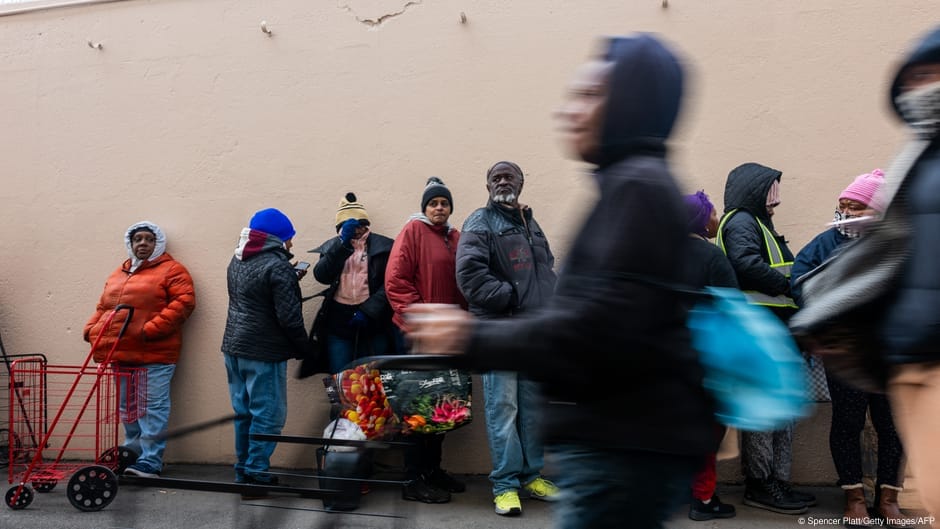
President Donald Trump says US poverty is at a record low. Senator Bernie Sanders says it's a global disgrace. Statistics say they're both right. DW looks at how governments and global organizations track poverty.

For months, President Donald Trump has boasted that the US poverty rate has reached a record low. And yet Senator Bernie Sanders frequently says the United States has "the highest rate of childhood poverty of any major nation."

These claims seem hard to reconcile, but each mostly holds up — depending on how poverty is defined and how it is measured.

The ongoing US debate about poverty and how to measure it mirrors discussions at the national and international levels across the world. Just last month, the United Nations issued a "wake-up call for the world" amid poverty rising for the first time after 15 years, reaching 1.2 billion globally.

In the US, poverty status often determines who qualifies for such government services as food assistance, subsidized health coverage and free preschool. Trump's claim that the poverty rate has never been lower in the United States is based on the Census Bureau's Official Poverty Measure (OPM), which compares a family's pretax income against the national poverty threshold.

The threshold dates to the 1960s, when it was set at three times the cost of a minimum nutritionally adequate diet and has only been adjusted for inflation since. In 2025, that was $16,749 per year for an individual under 65 and $32,649 for a family of four with two children.

In brief

For months, President Donald Trump has boasted that the US poverty rate has reached a record low. And yet Senator Bernie Sanders frequently says the United States has "the highest rate of childhood poverty of any major nation. Trump's claim that the poverty rate has never been lower in the United States is based on the Census Bureau's Official Poverty Measure (OPM), which compares a family's pretax income against the national poverty threshold.

This is the opening of the story, shared with credit to DW — Top stories. The rest of the report — with every detail — continues on the publisher’s website.

Continue reading at DW — Top stories ↗

Cookie settings

Choose which cookies we may use. You can change this at any time from Cookie settings in the footer. Details of each cookie are in the Cookie Policy.

Strictly necessary

Needed for sign-in, security, payments and remembering these choices. Always on.

Preferences

Remember settings such as dark mode.

Analytics & performance

Help us count visits, understand which pages, devices and countries our readers use, and measure how well the site performs – anonymous and aggregated.

Advertising & marketing

Lets advertising partners show and personalise adverts, measure impressions, clicks and visits, prevent ad fraud and pay us – this is how the free site is funded.

🔔 News notifications

Get headlines from NewsHub on this device — even when the site is closed.

You can switch this off at any time. Works on Android, Windows, Mac and Linux browsers; on iPhone/iPad add the site to your Home Screen first.