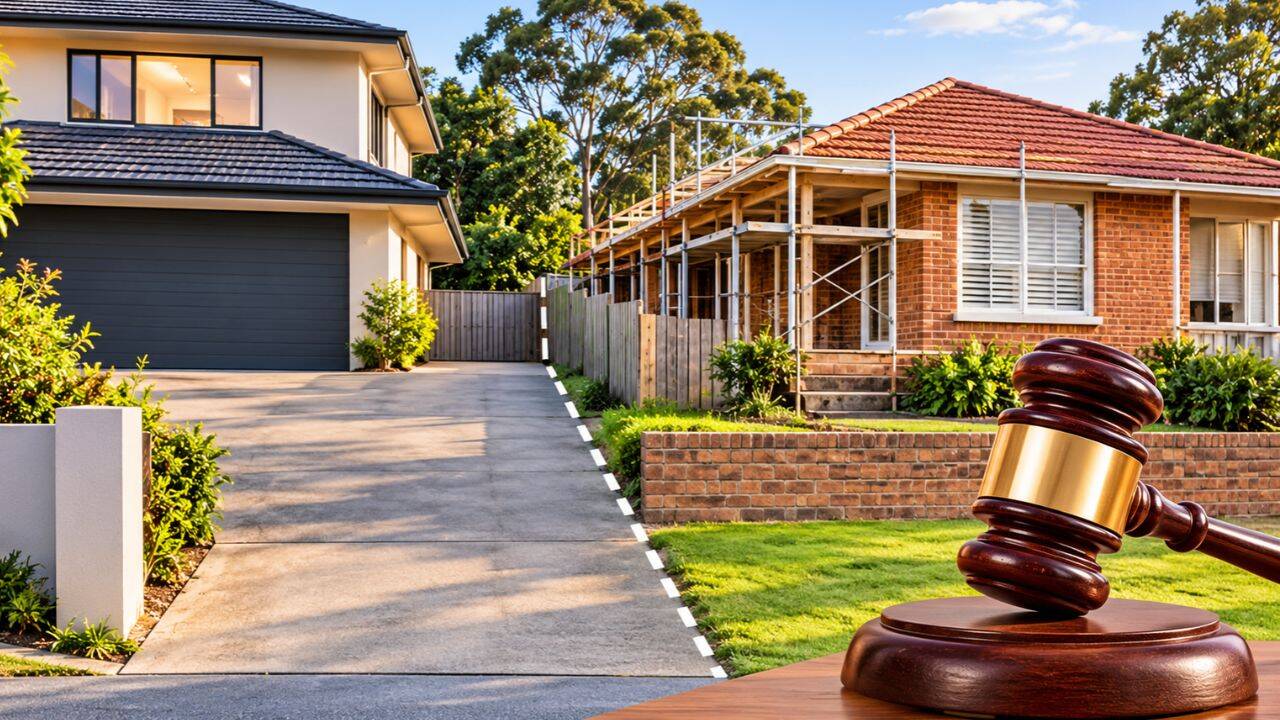
Two neighbours in Sydney have reached a settlement after finding that structures on their properties had crossed their shared boundary, with a court approving reciprocal access rights and ordering A$24,000 in compensation.The dispute involved two adjoining homes in Earlwood, where one property's concrete driveway extended onto the neighbouring land, while construction work and alterations to the other house crossed the boundary in the opposite direction.The New South Wales Land and Environment Court upheld the appeal and formalised an agreement allowing the encroaching structures and driveway to remain in place under specified easement arrangements.Driveway and house alterations crossed property boundaryAccording to the court judgment, the owners of a property at 10 Highland Crescent had a driveway extending onto the neighbouring property at 8 Highland Crescent. The driveway provided access to their garage but partly went beyond an existing registered right-of-way.Meanwhile, construction work carried out at the neighbouring house had also crossed the common boundary, with parts of the structures extending onto the first property's land.The court held conciliation conferences on June 29, September 2 and October 8, 2026, during which the parties reached an agreement to resolve the dispute.Court approves reciprocal easements, orders A$24,000 paymentUnder the settlement, the owners of 10 Highland Crescent will grant an easement allowing the neighbouring property's encroaching structures, except the fence, to remain in place, along…
Sydney neighbours settle property boundary dispute over driveway, home extensions; court orders A$24,000 compensation
In brief
Two neighbours in Sydney have reached a settlement after finding that structures on their properties had crossed their shared boundary, with a court approving reciprocal access rights and ordering A$24,000 in compensation.The dispute involved two adjoining homes in Earlwood, where one property's concrete driveway extended onto the neighbouring land, while construction work and alterations to the other house crossed the boundary in the opposite direction.The New South Wales Land and Environment Court upheld the appeal and formalised an agreement allowing the encroaching structures and driveway to remain in place under specified easement arrangements.Driveway and house alterations crossed p…
This is the opening of the story, shared with credit to The Times of India — World. The rest of the report — with every detail — continues on the publisher’s website.
Continue reading at The Times of India — World ↗