Israel's Prime Minister Benjamin Netanyahu met with opposition leader Gadi Eisenkot on Sunday to discuss forming a coalition government. The meeting came three weeks after Israeli President Isaac Herzog said he would give Eisenkot the first opportunity to form a government for the deeply divided country, following Israel's inconclusive national elections.The discussions took on new urgency after Netanyahu announced Saturday night that he was willing to have Eisenkot become prime minister first in a rotation arrangement under a possible unity deal.A joint statement by their parties on Sunday afternoon said the meeting began with a security briefing and then moved to discussing "the formation of a national unity government," with "both sides seeking to bridge the substantial differences between them."For months, Eisenkot has called Netanyahu, Israel's longest-serving prime minister, unfit for office and a threat to Israel's future. Netanyahu has led a relentless campaign against partnering with Arab-led parties — whose historic gains in the Oct. 27 elections turned them into likely but politically fraught allies for the opposition bloc. Neither Netanyahu's party nor the opposition bloc, led by Eisenkot, secured a majority in Israel's elections, according to the official election results. The prime minister's Likud party secured 27 seats in Israel's parliament, which contains 120 seats overall, while Eisenkot's Yashar party secured 21 seats, election data showed.
Israel's Netanyahu meets opposition leader to discuss unity government
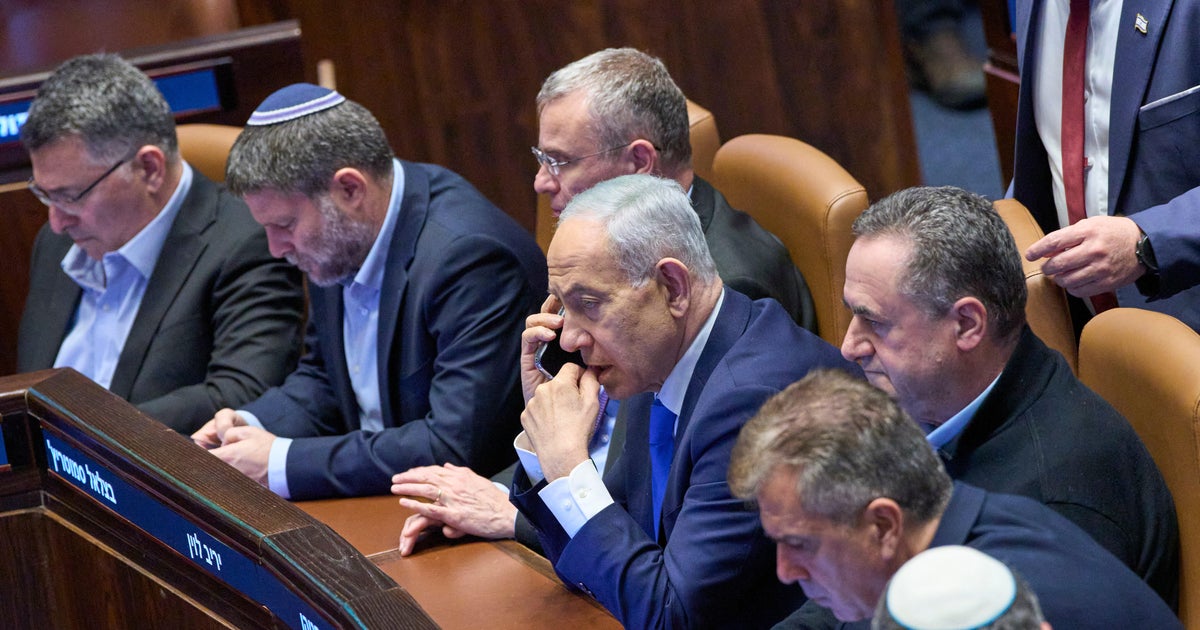
Israeli Prime Minister Benjamin Netanyahu and opposition leader Gadi Eisenkot met to discuss forming a unity government on Sunday morning.
In brief
Israel's Prime Minister Benjamin Netanyahu met with opposition leader Gadi Eisenkot on Sunday to discuss forming a coalition government. Neither Netanyahu's party nor the opposition bloc, led by Eisenkot, secured a majority in Israel's elections, according to the official election results. The prime minister's Likud party secured 27 seats in Israel's parliament, which contains 120 seats overall, while Eisenkot's Yashar party secured 21 seats, election data showed.
This is the opening of the story, shared with credit to CBS News — World. The rest of the report — with every detail — continues on the publisher’s website.
Continue reading at CBS News — World ↗