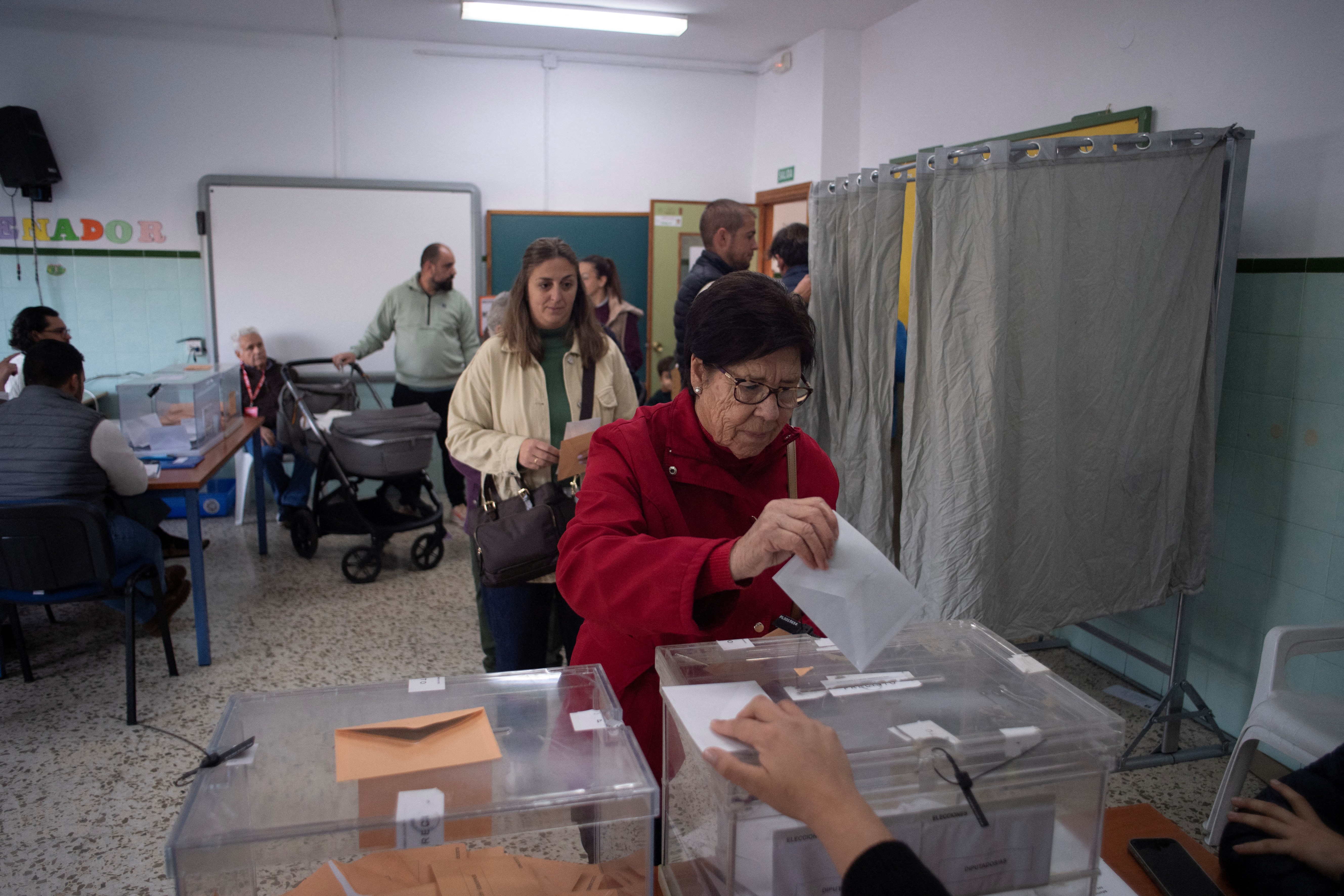
Spanish voters headed to the polls on Sunday in a general election that is expected to be pivotal. Indeed, it may even hold particular significance for the Arab world, whether in terms of relations with Morocco following the mass crossing into the Spanish enclave of Ceuta at the end of July or in relation to the Palestinian cause and the Arab-Israeli conflict. The ruling left-wing leadership stands with the Palestinians, while the right-wing opposition openly supports Israel.
In fact, Spain today contains all the ingredients capable of complicating crises and igniting tensions. Much the same can be said of France, Spain’s neighbor, which will elect a new president in about five months’ time.
In both countries, profound domestic strains prevail, driven by interconnected crises involving housing, unemployment, immigration and increasingly visible separatist tendencies. At the same time, broad national consensus is weakening, while Europe’s current institutions are becoming more fragile. Although the broad umbrella of the EU has, for a time, restrained separatist impulses, its continued expansion to encompass virtually all of formerly communist Eastern Europe has weakened the rationale of the bloc’s founding core, the states that viewed the European project as a shared destiny: West Germany, France, Italy and the Benelux countries of the Netherlands, Belgium and Luxembourg.