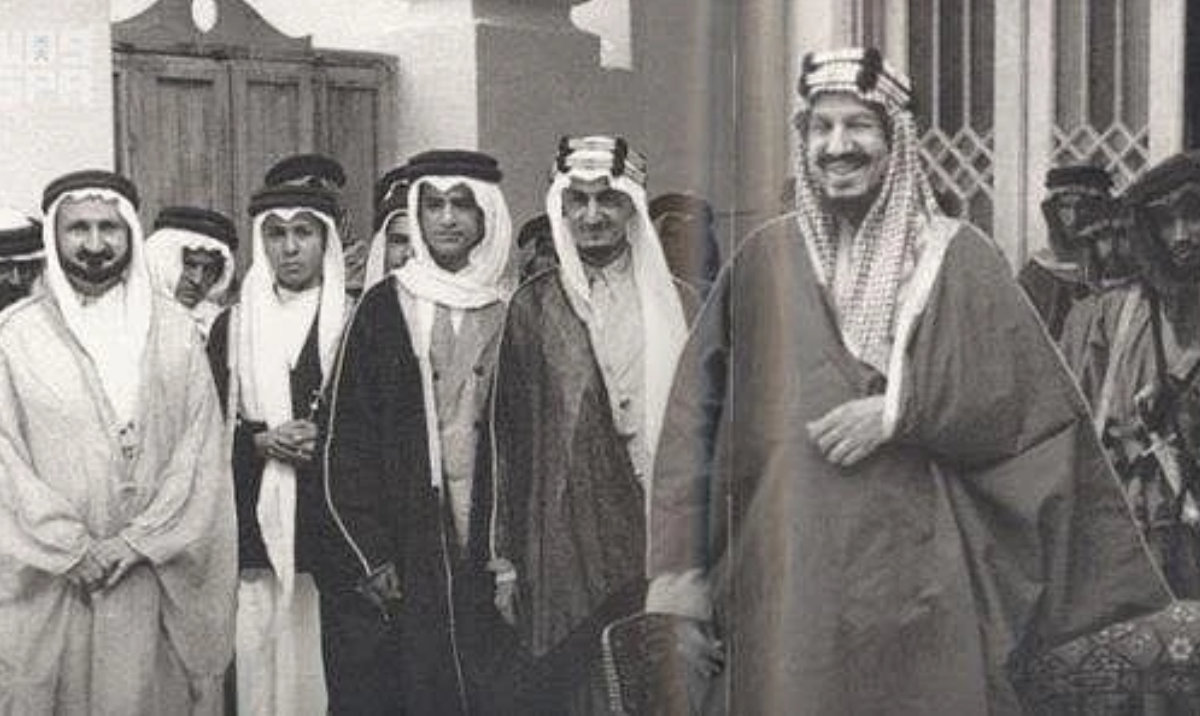
King Abdulaziz’s legacy in an age of global uncertainty

King Abdulaziz’s legacy in an age of global uncertainty

Every November, Saudis remember the extraordinary legacy of King Abdulaziz bin Abdulrahman Al-Saud, the founder of the modern Kingdom of Saudi Arabia, who passed away on Nov. 9, 1953.

His remarkable achievements went far beyond the unification of a vast land long marked by political fragmentation and tribal rivalries. He fundamentally changed the course of history in the Arabian Peninsula, leaving behind a legacy that continues to shape the Middle East to this day.

As we mark the 73rd anniversary of his passing and look ahead to the 300th anniversary of the founding of the First Saudi State next February, it is worth asking a crucial question: What would the Middle East look like today if King Abdulaziz had never succeeded in unifying Saudi Arabia?

The answer unquestionably goes beyond the Kingdom’s borders. Indeed, the establishment of a unified Saudi state was more than a historic achievement for Saudis: Its benefits would eventually reach millions across the Arab and Islamic worlds.

The significance of Saudi Arabia’s unification extends far beyond its borders. Over the decades, the Kingdom has become a source of economic opportunity, an example of political stability and strategic influence whose impact reaches across the Arab and Islamic worlds.

Saudi Arabia’s enduring stability cannot be explained by oil wealth or economic development alone.

In brief

Every November, Saudis remember the extraordinary legacy of King Abdulaziz bin Abdulrahman Al-Saud, the founder of the modern Kingdom of Saudi Arabia, who passed away on Nov. The answer unquestionably goes beyond the Kingdom’s borders. The significance of Saudi Arabia’s unification extends far beyond its borders. Saudi Arabia’s enduring stability cannot be explained by oil wealth or economic development alone.

This is the opening of the story, shared with credit to Arab News. The rest of the report — with every detail — continues on the publisher’s website.

Continue reading at Arab News ↗

Cookie settings

Choose which cookies we may use. You can change this at any time from Cookie settings in the footer. Details of each cookie are in the Cookie Policy.

Strictly necessary

Needed for sign-in, security, payments and remembering these choices. Always on.

Preferences

Remember settings such as dark mode.

Analytics

Help us understand visits and countries – anonymous and aggregated.

Marketing

Used to measure and personalise adverts and social media content.

🔔 News notifications

Get headlines from NewsHub on this device — even when the site is closed.

You can switch this off at any time. Works on Android, Windows, Mac and Linux browsers; on iPhone/iPad add the site to your Home Screen first.