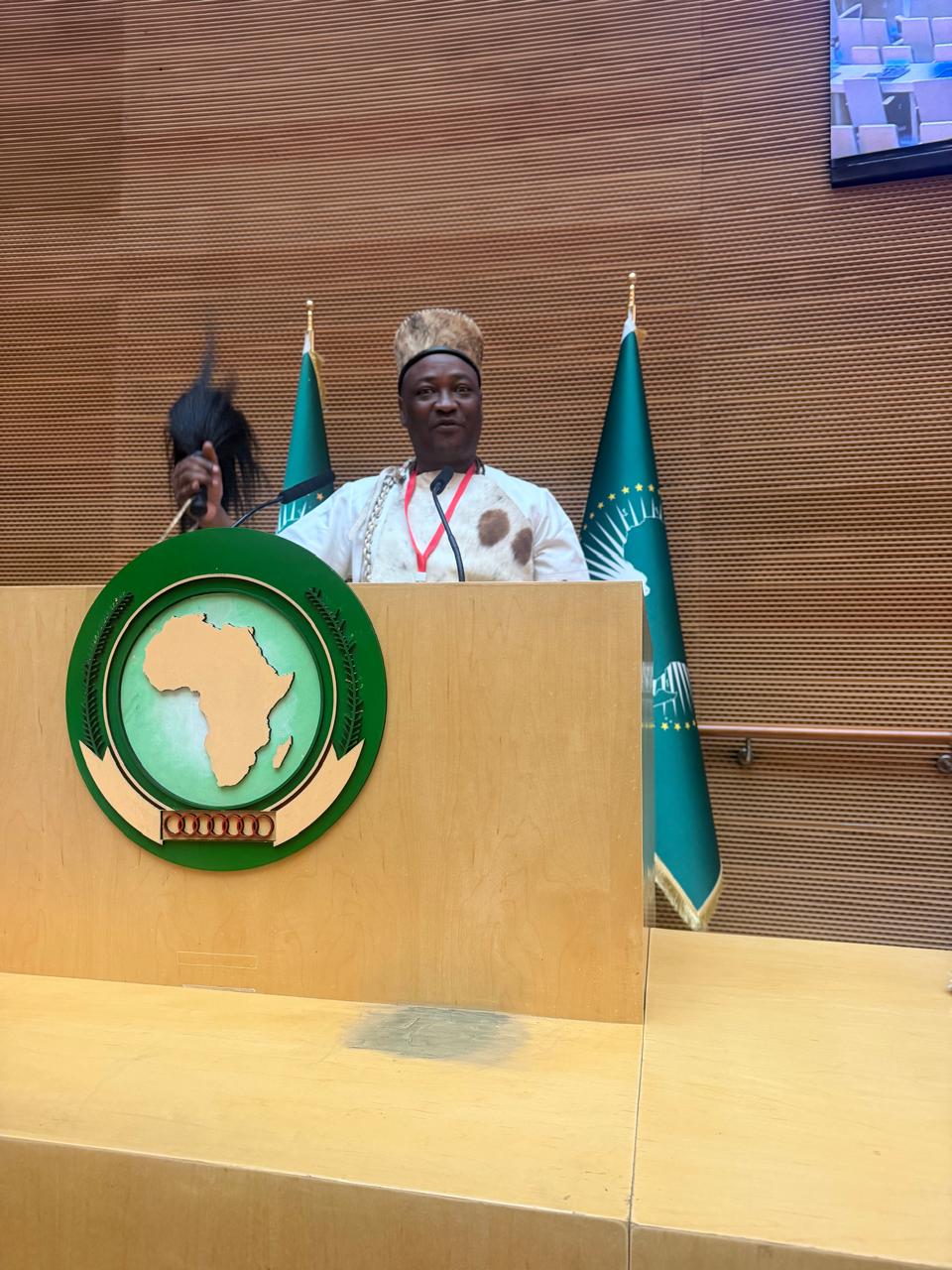
Chief Kyalo Muli urges AU to restore Africa’s traditional governance systems

Chief Kyalo Muli urges AU to restore Africa’s traditional governance systems

Anzauni Chief His Royal Highness Kyalo Muli I has challenged African governments to address what he termed an “unfinished liberation”, arguing that the continent attained political independence but failed to fully restore indigenous systems of governance.

Speaking at the Africa Reparations Forum 2026 held at the African Union Headquarters in Addis Ababa, Chief Muli, who is also the Party Leader of the National Liberal Party (NLP) of Kenya, declared that Africa is “not yet Uhuru” because traditional institutions that existed before colonialism remain marginalised.

“Everyone is talking about reparations, justice and action against the injustices of colonialism. But what about the governments that took over from colonial powers and continued with colonial systems?” he posed.

Addressing an audience of traditional leaders, African Union officials, scholars and representatives from across the continent, Chief Muli argued that independence gave African nations flags and national anthems but did not fully return authority to indigenous institutions.

He said colonial administrations dismantled African governance structures, including councils of elders, kingdoms and traditional leadership systems, replacing them with provincial administrations designed primarily for control.

According to Chief Muli, many African founding leaders, while focused on nation-building and unity after independence, retained colonial administrative structures, land laws and governance models.

“Independence was meant to reclaim sovereignty and return power to the original custodians of African communities.

In brief

Anzauni Chief His Royal Highness Kyalo Muli I has challenged African governments to address what he termed an “unfinished liberation”, arguing that the continent attained political independence but failed to fully restore indigenous systems of governance. According to Chief Muli, many African founding leaders, while focused on nation-building and unity after independence, retained colonial administrative structures, land laws and governance models.

This is the opening of the story, shared with credit to KBC. The rest of the report — with every detail — continues on the publisher’s website.

Continue reading at KBC ↗

Cookie settings

Choose which cookies we may use. You can change this at any time from Cookie settings in the footer. Details of each cookie are in the Cookie Policy.

Strictly necessary

Needed for sign-in, security, payments and remembering these choices. Always on.

Preferences

Remember settings such as dark mode.

Analytics & performance

Help us count visits, understand which pages, devices and countries our readers use, and measure how well the site performs – anonymous and aggregated.

Advertising & marketing

Lets advertising partners show and personalise adverts, measure impressions, clicks and visits, prevent ad fraud and pay us – this is how the free site is funded.

🔔 News notifications

Get headlines from NewsHub on this device — even when the site is closed.

You can switch this off at any time. Works on Android, Windows, Mac and Linux browsers; on iPhone/iPad add the site to your Home Screen first.