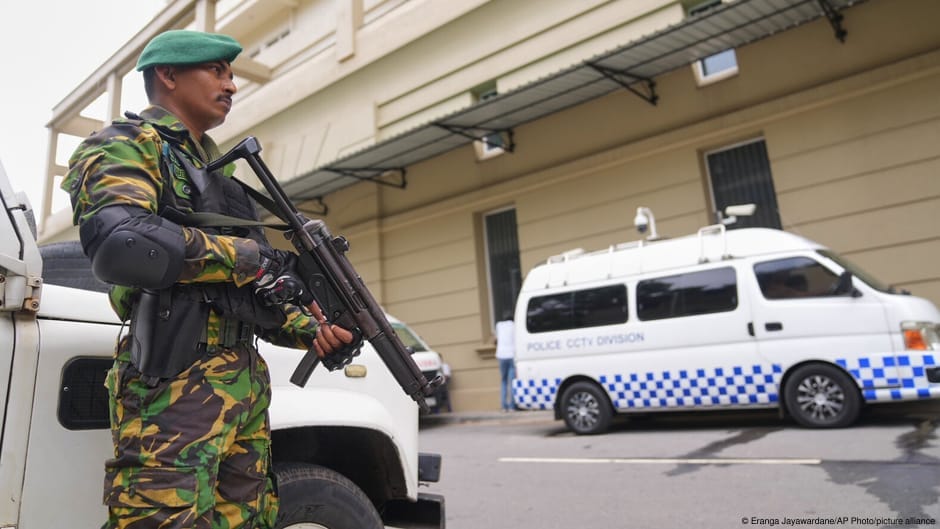
For 46-year-old Ganesan (name changed) from Batticaloa in eastern Sri Lanka, any discussion of terrorism brings back memories of his two-year-old daughter, who was killed in the 2019 Easter Sunday attacks. She was one of 270 people who lost their lives in a series of coordinated bombings targeting three churches and three luxury hotels across the island nation.
The attacks were the deadliest in Sri Lanka since the end of its civil war in 2009. Over 500 people were injured.
Ganesan's daughter was killed in an attack on the Zion Church in Batticaloa.
But Ganesan remains skeptical when asked about the new counterterrorism bill pushed by the government in Sri Lanka.
"Laws against terrorism are necessary to prevent terrorist attacks, but they should not target the innocent or suppress human rights," he told DW.
The administration led by President Anura Kumara Dissanayake and his National People's Power faction
has proposed the Protection of the State from Terrorism Act (PSTA) as a replacement for the existing Prevention of Terrorism Act (PTA). The PTA has many critics who claim that the contentious law has enabled arbitrary detention and the torture of detainees for decades.
The government argues that a robust anti-terrorism law is needed to address the increasingly complex local and international activities of extremist groups.