Microsoft Outlook and Teams users around the world, including in Europe, were locked out of their emails and meetings this week after a global outage. The disruption has renewed questions about how much the continent relies on a few American firms.“The episode shows once again the downside of depending so heavily on a handful of large US tech companies,” Tommaso Valletti told Euronews Next.Valletti is Professor of Economics at Imperial College Business School in London, United Kingdom, and was the European Commission’s chief competition economist from 2016 to 2019.The disruption began on Thursday afternoon European time and hit users in 74 countries and territories, according to the outage tracker Downdetector. In the UK, some doctors' surgeries told patients to phone them with urgent queries.Microsoft said there was no sign of a cyber attack but has not yet named a root cause. Services were still being gradually restored on Friday. It follows Microsoft 365 outages in January and August.How dependent is Europe?Amazon, Microsoft and Google together hold about 70% of the European cloud market, according to Synergy Research Group. European providers account for around 15%, down from about 29% in 2017. The largest of them, Germany’s SAP and Deutsche Telekom, hold just 2% each.Euronews has previously reported that around 80% of Europe’s digital infrastructure and technology comes from outside the EU.That…
Can Europe’s tech firms really replace Amazon, Google and Microsoft?
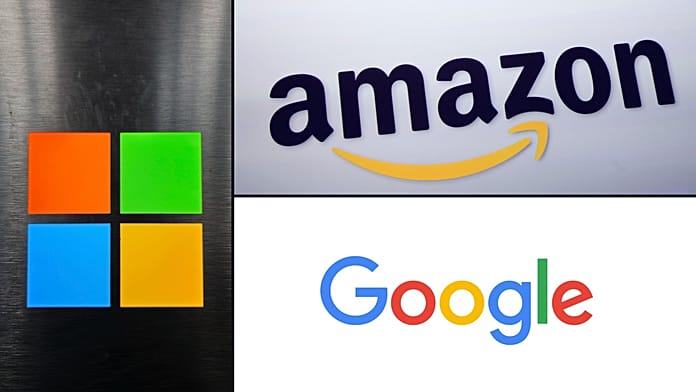
MEPs want public bodies to buy more European cloud services. The continent’s alternatives are growing, but they remain a fraction of the size of Amazon, Microsoft and Google.
In brief
Microsoft Outlook and Teams users around the world, including in Europe, were locked out of their emails and meetings this week after a global outage. It follows Microsoft 365 outages in January and August.How dependent is Europe?Amazon, Microsoft and Google together hold about 70% of the European cloud market, according to Synergy Research Group. European providers account for around 15%, down from about 29% in 2017.
This is the opening of the story, shared with credit to Euronews. The rest of the report — with every detail — continues on the publisher’s website.
Continue reading at Euronews ↗