

Dubai: Imagine an aircraft that could fly only once before being discarded. Every journey would require building an entirely new plane, making air travel extraordinarily expensive. That is essentially the problem space engineers have struggled with for decades.
Now, Elon Musk’s SpaceX has taken a major step towards changing that.
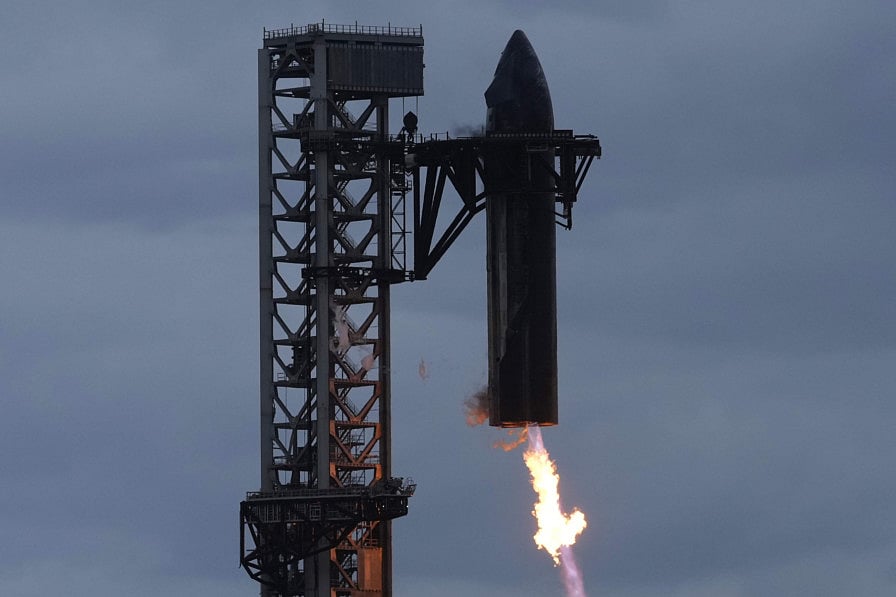
In a historic achievement on Saturday, SpaceX successfully caught its Starship spacecraft as it returned from orbit, using giant mechanical arms attached to a launch tower in Texas.
The feat could transform space exploration by making spacecraft reusable, reducing the cost of missions and bringing humanity closer to establishing a sustained presence on the Moon and eventually Mars.
AT A GLANCE: SpaceX’s historic Starship catch
What happened? SpaceX caught a Starship spacecraft returning from orbit for the first time.
When? November 14, 2026, at Starbase, Texas.
How? Giant mechanical arms caught the descending spacecraft.
Mission: 22 hours in space, 14 Earth orbits, 26 satellites deployed.
Why significant? A major step towards fully reusable spacecraft and cheaper space travel.
What went wrong? The Super Heavy booster was lost during its return.
What next? Prove repeated reuse, master orbital refuelling and prepare for Moon missions.
Long-term goal: More affordable space access and eventual human missions to Mars.
But what exactly happened, why does it matter, and how soon could ordinary people benefit?