A ranching family in South Dakota has reported a major increase in plant and wildlife diversity after changing how they manage their cattle. Nearly a decade after adopting rotational grazing and satellite-based fencing, Caden and Jori Smiley say their land has healthier grass, more plant varieties and a growing number of wild animals. Caden Smiley returned to his family's ranch near Kadoka, South Dakota, in 2016. He and his wife, Jori, later moved away from traditional grazing methods and introduced a system that allows grasslands to recover between periods of grazing. In a report to the Tri-State Neighbor, the couple said the changes, supported by virtual fencing technology, have improved the condition of their pastures and helped wildlife return to the ranch.A technological shift in pasturesThe biggest change at Smiley Ranch has been the move to rotational grazing. Instead of allowing cattle to feed in the same pasture throughout the season, the system moves them between different sections of land. When Caden returned to the family ranch in 2016, he said the operation followed "conventional grazing, pretty standard for this area." Under that approach, cattle had continuous access to the same areas. This could lead to overgrazing, particularly where the grass was most attractive to the animals, while other parts of the pasture received less attention.The Smileys have since introduced…
South Dakota ranchers report wildlife boom after adopting satellite-guided rotational grazing
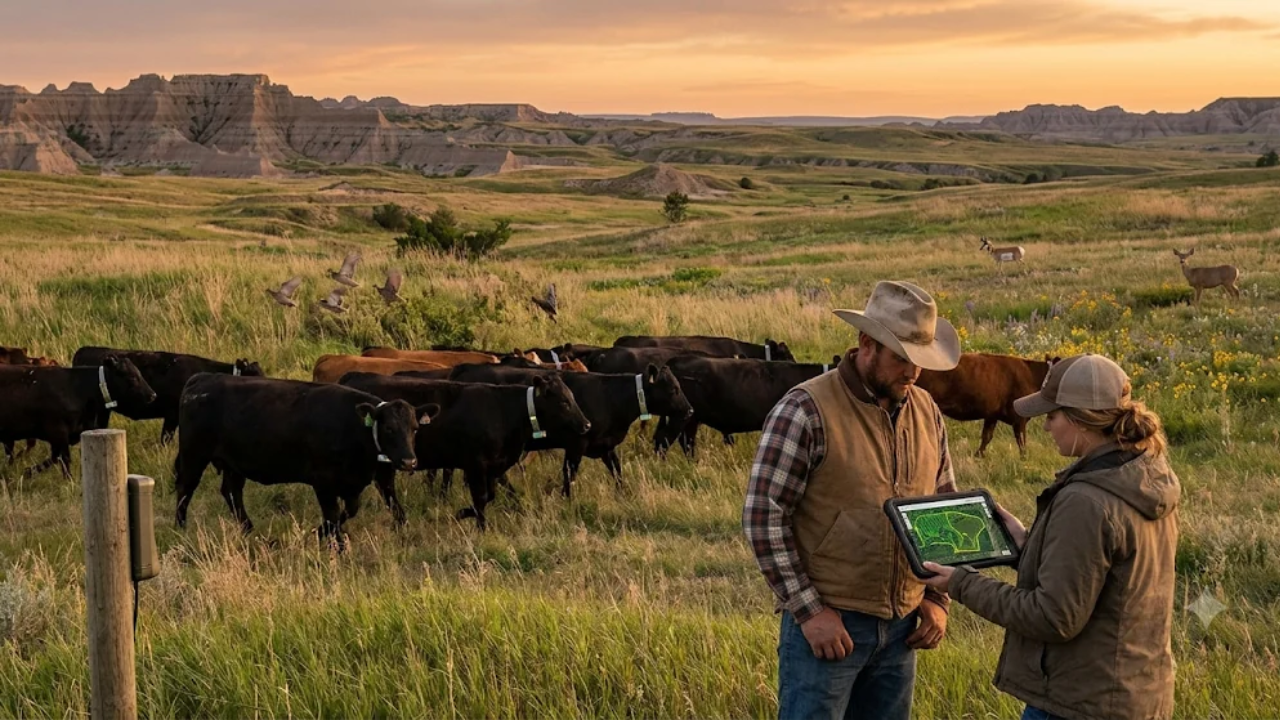
In South Dakota, a ranching family has harnessed the power of rotational grazing and cutting-edge virtual fencing to rejuvenate their land's biodiversity. By allowing grasslands to rest between grazing sessions, they have significantly improved plant health and restored native ecology. This approach not only boosts wildlife populations, such as diverse bird species and larger mammals, but also streamlines cattle…
In brief
A ranching family in South Dakota has reported a major increase in plant and wildlife diversity after changing how they manage their cattle. Nearly a decade after adopting rotational grazing and satellite-based fencing, Caden and Jori Smiley say their land has healthier grass, more plant varieties and a growing number of wild animals. Caden Smiley returned to his family's ranch near Kadoka, South Dakota, in 2016.
This is the opening of the story, shared with credit to The Times of India — World. The rest of the report — with every detail — continues on the publisher’s website.
Continue reading at The Times of India — World ↗