📰 Newspapers

Czechia: Scores protest against public media reform

Czechia: Scores protest against public media reform

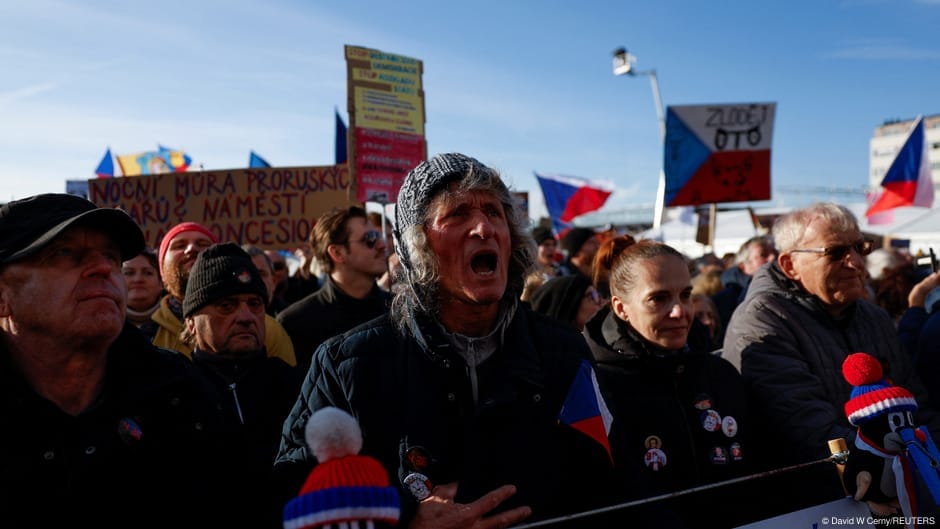
Hundreds of thousands of people attended the protest against the government's plan to abolish broadcasting fees. Critics say the nationalist coalition would like to secure control over the media.

A protest against plans to abolish broadcasting fees in Czechiadrew between 350,000 and 450,000 people in Prague, organizers said.

The amount of protesters resulted in overcrowded public transport, with many people traveling from other cities by bus and train.

According to protesters, the plan could bring public broadcasters under the control of the country's right-wing government under billionaire Prime Minister Andrej Babis.

Babis himself defended the plan last week, saying that his government is not interested in controlling or nationalizing public media.

"None of what the people are protesting against… is true," he said. Foreign Minister Petr Macinka also replied to the criticism by accusing the protest's organizers of turning demonstrations into a business model.

Since its introduction in April, the plan resulted in several large-scale protests, with Czech TV and radio going on a one-day strike in protest against it.

International groups have criticized the plan, including the European Broadcasting Union, the European Federation of Journalists and Reporters Without Borders.

The government would like public broadcasters to be financed by the state budget rather than through fees, arguing that while the plan will not affect editorial independence, broadcasters need to cut costs. Critics accused the Czech government of wanting to secure more influence through the decision.

In brief

A protest against plans to abolish broadcasting fees in Czechiadrew between 350,000 and 450,000 people in Prague, organizers said. According to protesters, the plan could bring public broadcasters under the control of the country's right-wing government under billionaire Prime Minister Andrej Babis. Babis himself defended the plan last week, saying that his government is not interested in controlling or nationalizing public media.

This is the opening of the story, shared with credit to DW — Top stories. The rest of the report — with every detail — continues on the publisher’s website.

Continue reading at DW — Top stories ↗

Cookie settings

Choose which cookies we may use. You can change this at any time from Cookie settings in the footer. Details of each cookie are in the Cookie Policy.

Strictly necessary

Needed for sign-in, security, payments and remembering these choices. Always on.

Preferences

Remember settings such as dark mode.

Analytics & performance

Help us count visits, understand which pages, devices and countries our readers use, and measure how well the site performs – anonymous and aggregated.

Advertising & marketing

Lets advertising partners show and personalise adverts, measure impressions, clicks and visits, prevent ad fraud and pay us – this is how the free site is funded.

🔔 News notifications

Get headlines from NewsHub on this device — even when the site is closed.

You can switch this off at any time. Works on Android, Windows, Mac and Linux browsers; on iPhone/iPad add the site to your Home Screen first.