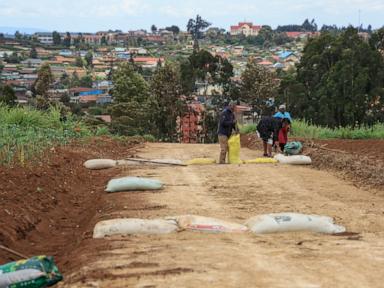
Farmers in parts of Kenya are turning to simple soil conservation techniques to protect their crops and farmland ahead of the October-December rainy season that is projected to be heavier than usual
LIMURU, Kenya -- After losing much of her farm’s topsoil to heavy rains two years ago, Elizabeth Itotia is taking no chances as Kenya faces the October–December rainy season, which is expected to bring heavier-than-usual downpours.
Itotia’s 5-acre (2-hectare) farm in Limuru, Kiambu County, in central Kenya, lies on a slope that makes it vulnerable to soil erosion. Catastrophic rains in 2024 washed away much of the nutrient-rich topsoil and destroyed several crops, including kale, spinach, cabbage, potatoes and native vegetables, leaving her with estimated losses of 200,000 Kenyan shillings ($1,500). More than 230 people were killed in the floods.
To restore the damaged land, Itotia and her family had to bring in topsoil from other farms, an effort that required additional labor and money to make the land productive again.
Her experience highlights the challenges farmers in Kenya face when extreme weather events cause losses. In a country where most farmers depend on the rainy seasons, recovering from such losses can take months or even years.
The Kenya Meteorological Department forecast El Niño conditions during the short-rains season, which runs from mid-October to December.