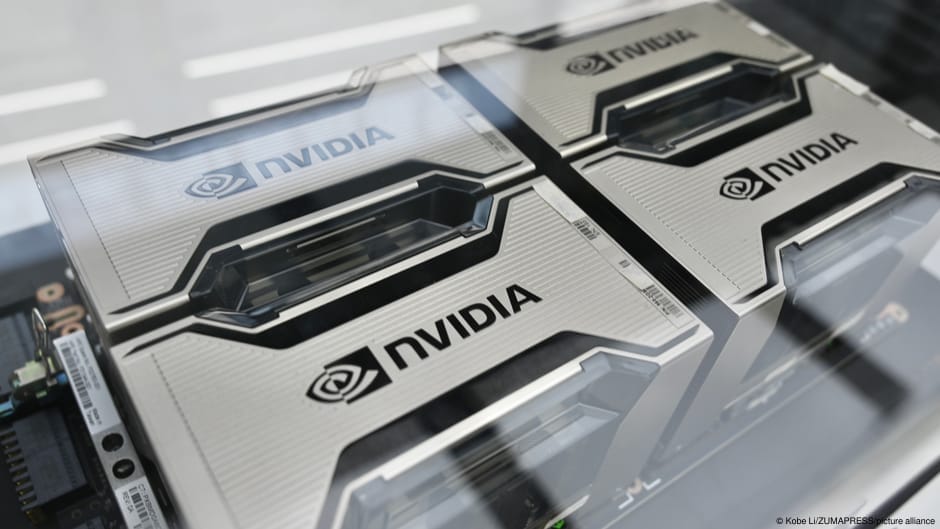
China has ambitious plans to become the leader in the global race for artificial intelligence (AI). Beijing is aware that the country needs cutting-edge chips to achieve this goal.
Vice Premier Ding Xuexiang, who chairs the Communist Party's Commission on Science and Technology, has been tasked with strengthening China's capacity for technological innovation, which would enhance its strategic competitiveness against the United States.
The party is currently using AI to monitor citizens, develop advanced unmanned weapons systems, and transform economic sectors through robotics and industrial automation, among other things.
But the US has so far been leading the way in manufacturing technology and chip design. And Washington has taken a slew of measures to retain its dominance in this strategic sector.
As early as 2023, the then Biden administration decided to restrict the export of advanced semiconductors and chip manufacturing equipment to China, citing national security reasons.
Beijing slammed the US restrictions, calling them "unilateral and arbitrary."
US chipmakers, however, have been drawn to China's vast and rapidly growing market.
Jensen Huang, who resigned as CEO of the American AI chip manufacturer Nvidia last week, enjoyed something of a rock star status in China. The 63-year-old, who was born in Taiwan, is viewed in China as a successful entrepreneur.