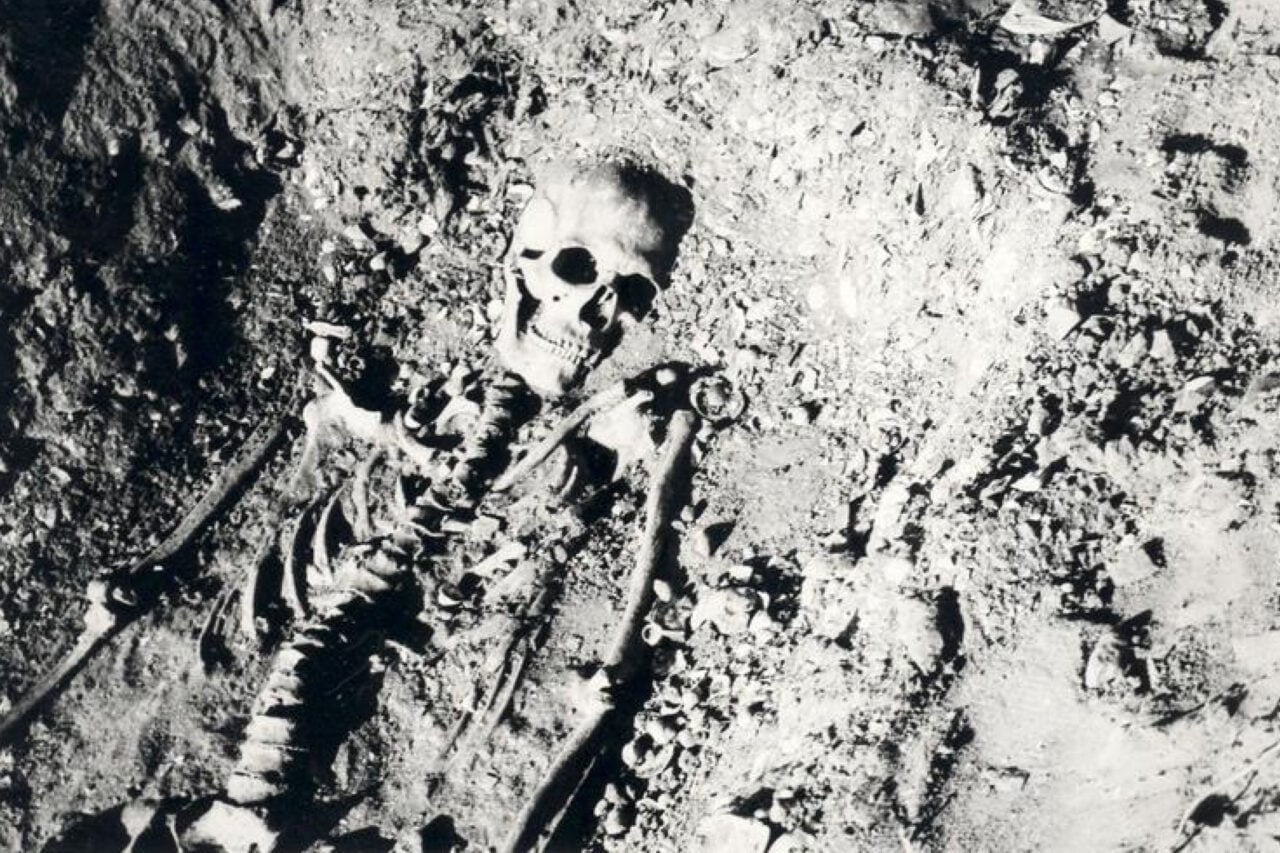
For decades, scientists were puzzled by the Rødhals Man, a skeleton from prehistoric Denmark. His bones told two different stories—isotope analysis showed a typical diet of a Mesolithic hunter-gatherer, whereas carbon dating said he lived alongside Neolithic farmers. As it turns out, his life was actually a little bit of both.
In fact, the Rødhals Man may be the first known “eyewitness” to the Neolithic Revolution in the archaeological record, according to a study published today in Antiquity. The man lived roughly 6,000 years ago and was buried in a shell midden on the island of Sejerø in Denmark. The new findings build upon previous analysis of his remains while presenting new data on his bones, teeth, and genetic information. Specifically, the team believes that he grew up as a Mesolithic hunter-gatherer but later in his life interacted with the first generation of Neolithic farmers.
“He did not fully embrace the farmers’ lifestyle or run away from them but adopted some components of farmer culture while maintaining the way of life of his indigenous ancestors,” John Meadows, a corresponding author of the study and an archaeologist at Kiel University in Germany, said in a statement.
The Neolithic Revolution is also known as the Agricultural Revolution.