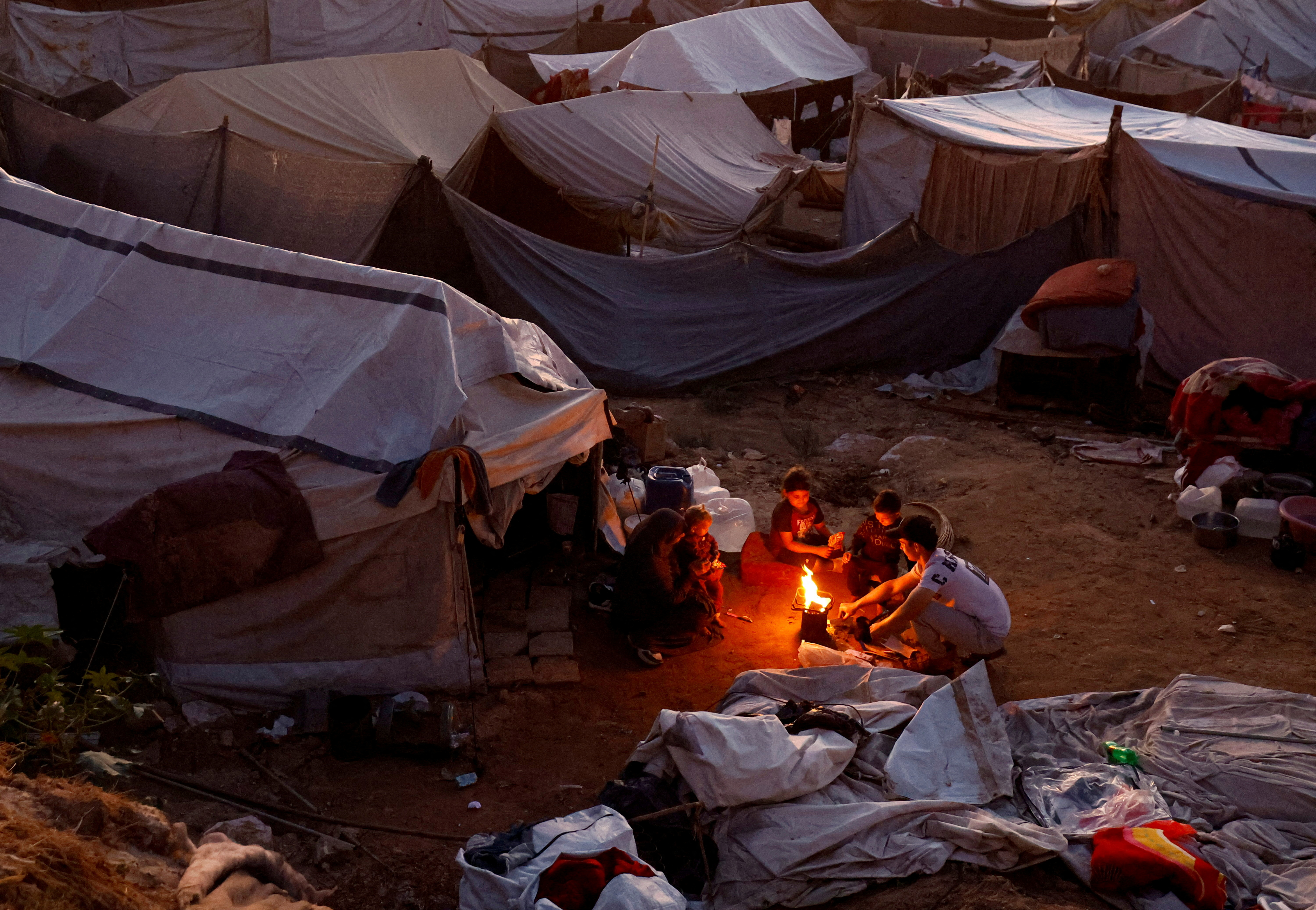
LONDON: Harsh winter weather could reverse the fragile improvements to food security achieved in the embattled Gaza Strip, as critical funding shortages and Israeli restrictions on aid deliveries threaten efforts to provide food and shelter for displaced families, UN agencies warned on Tuesday.
The International Organization for Migration and the World Food Programme said the gains continued to depend largely on humanitarian assistance, rather than any improvements in livelihoods, markets or local food production.
Meanwhile, the increasingly severe seasonal weather was damaging shelters and spoiling food supplies, increasing pressure on families already struggling to meet their basic needs.
More than 1.7 million people remain displaced in Gaza, 1.4 million face acute levels of hunger, and nearly 2 million need shelter assistance, the agencies warned.
“Families in Gaza are facing their first sleepless nights of a very long winter ahead,” said Shaun Hughes, the WFP’s country director for Palestine.
“Unless we get immediate support to scale up the humanitarian response, we risk this becoming not only a shelter crisis but also a deeper food security crisis.”
Funding shortages have already forced the WFP to reduce hot meals to one every other day and cut the amounts of food parcels and cash assistance it provides.