A robot developed by researchers at the California Institute of Technology (Caltech) has successfully assembled part of a structure in space without astronauts carrying out the construction. Launched into orbit in March 2026, the robotic system joined individual components to build a section of an experimental antenna, demonstrating how future space structures could be constructed beyond Earth.The demonstration is part of the US Defence Advanced Research Projects Agency's (DARPA) Novel Orbital and Moon Manufacturing, Materials and Mass-efficient Design (NOM4D) programme. According to DARPA's announcement, the Caltech payload used a robotic system to connect composite truss members with specially designed joints while deploying a thin reflective mesh. The experiment marks a significant step towards building large structures directly in orbit.The project could eventually change how scientists and engineers design space-based antennas, solar arrays and other large installations. Instead of transporting a fully assembled structure from Earth, future missions could carry individual building components and put them together in space. How did the robot complete this task, and what could its success mean for future space exploration?How did the Caltech robot assemble a structure in space?The robotic system, known as the Autonomous In-Space Tensioned Reflector Assembly (ASTRA), was designed to build a truss structure using individual components stored inside its payload.
Caltech robot revolutionizes space: Caltech robot builds structure in space; Space assembly showcases future construction possibilities
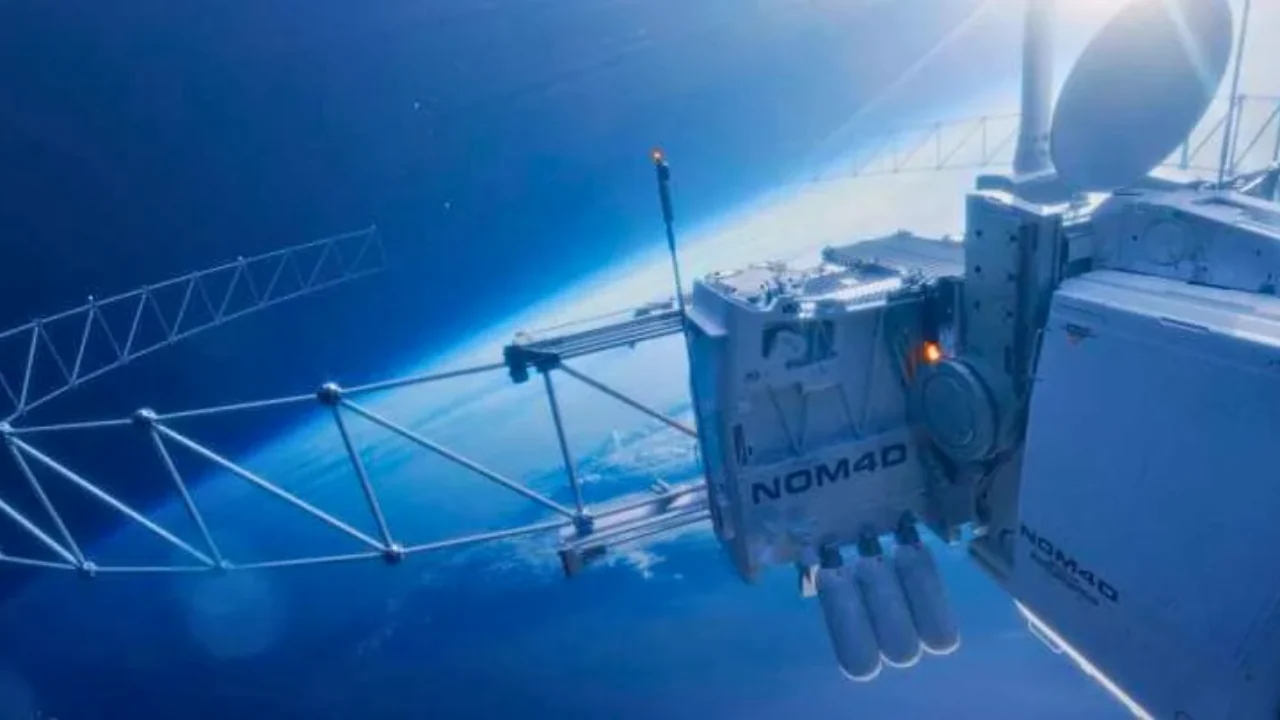
A robot developed by researchers at California Institute of Technology constructed a segment of a space structure autonomously. The assembly occurred as part of DARPA's NOM4D programme, testing innovative techniques for space construction. The Autonomous In-Space Tensioned Reflector Assembly robot utilized individual components to build an experimental antenna. Following the launch, the robot successfully…
In brief
A robot developed by researchers at the California Institute of Technology (Caltech) has successfully assembled part of a structure in space without astronauts carrying out the construction. How did the robot complete this task, and what could its success mean for future space exploration?How did the Caltech robot assemble a structure in space?The robotic system, known as the Autonomous In-Space Tensioned Reflector Assembly (ASTRA), was designed to build a truss structure using individual components stored inside its payload.
This is the opening of the story, shared with credit to The Times of India — World. The rest of the report — with every detail — continues on the publisher’s website.
Continue reading at The Times of India — World ↗